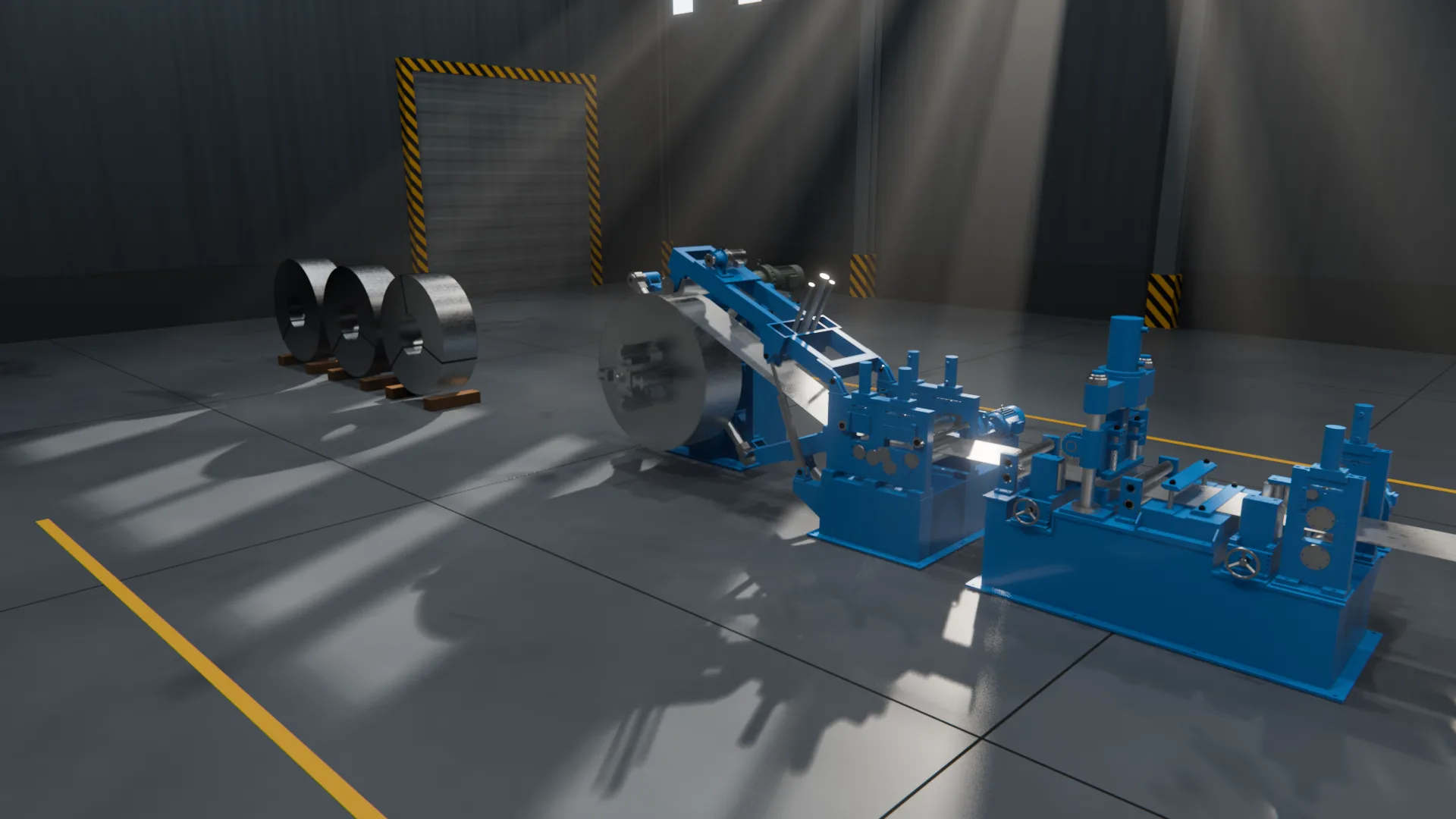
Uncoiler to accumulator · single machines available
Entry & Line Equipment
Uncoilers, levelers, shear & butt welders, accumulators, forming & sizing units and flying saws for ERW tube mills; entry machines also fit existing mills.
Illustrative render of a generic workshop · proportions and configuration vary by project
Following the strip
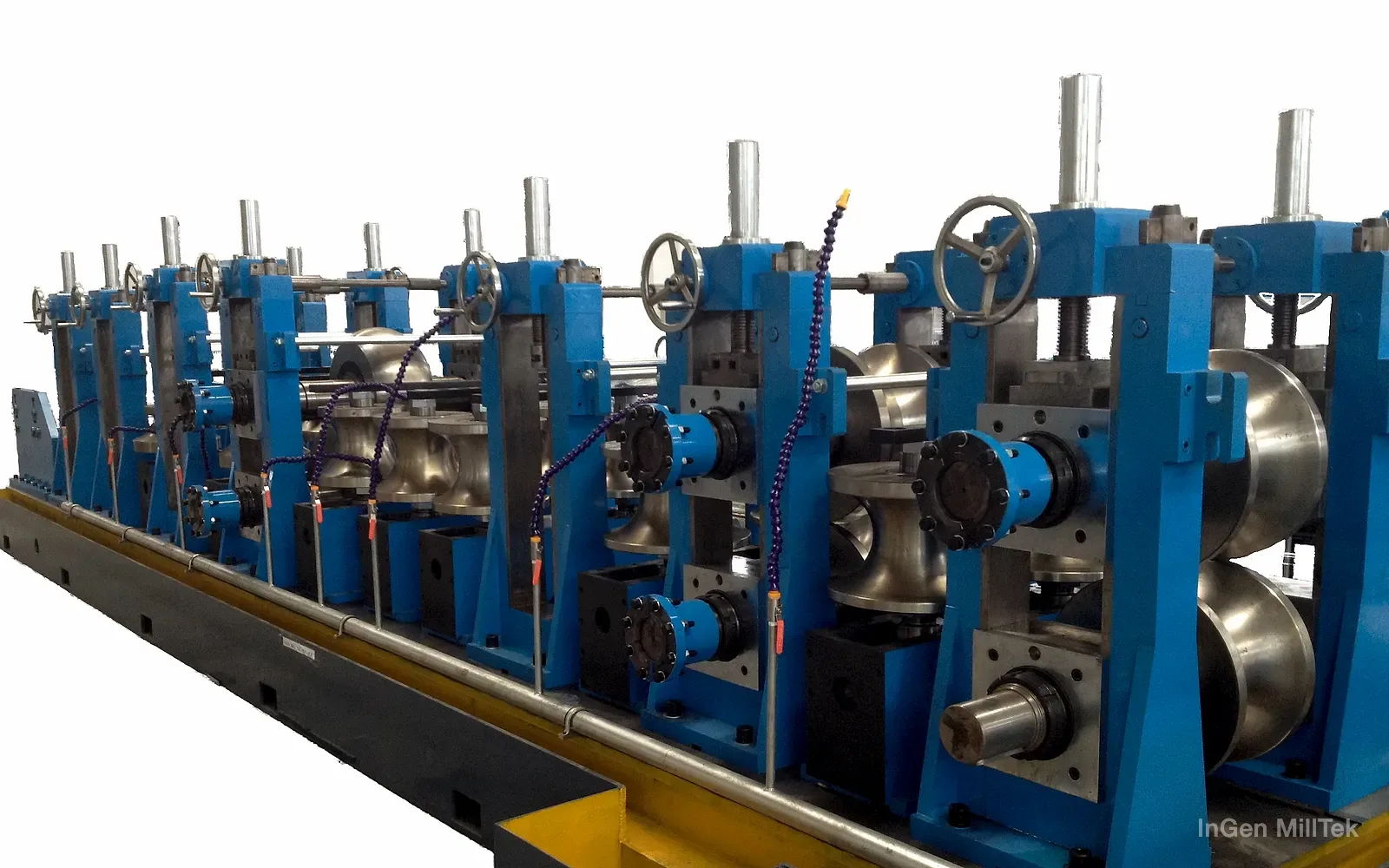
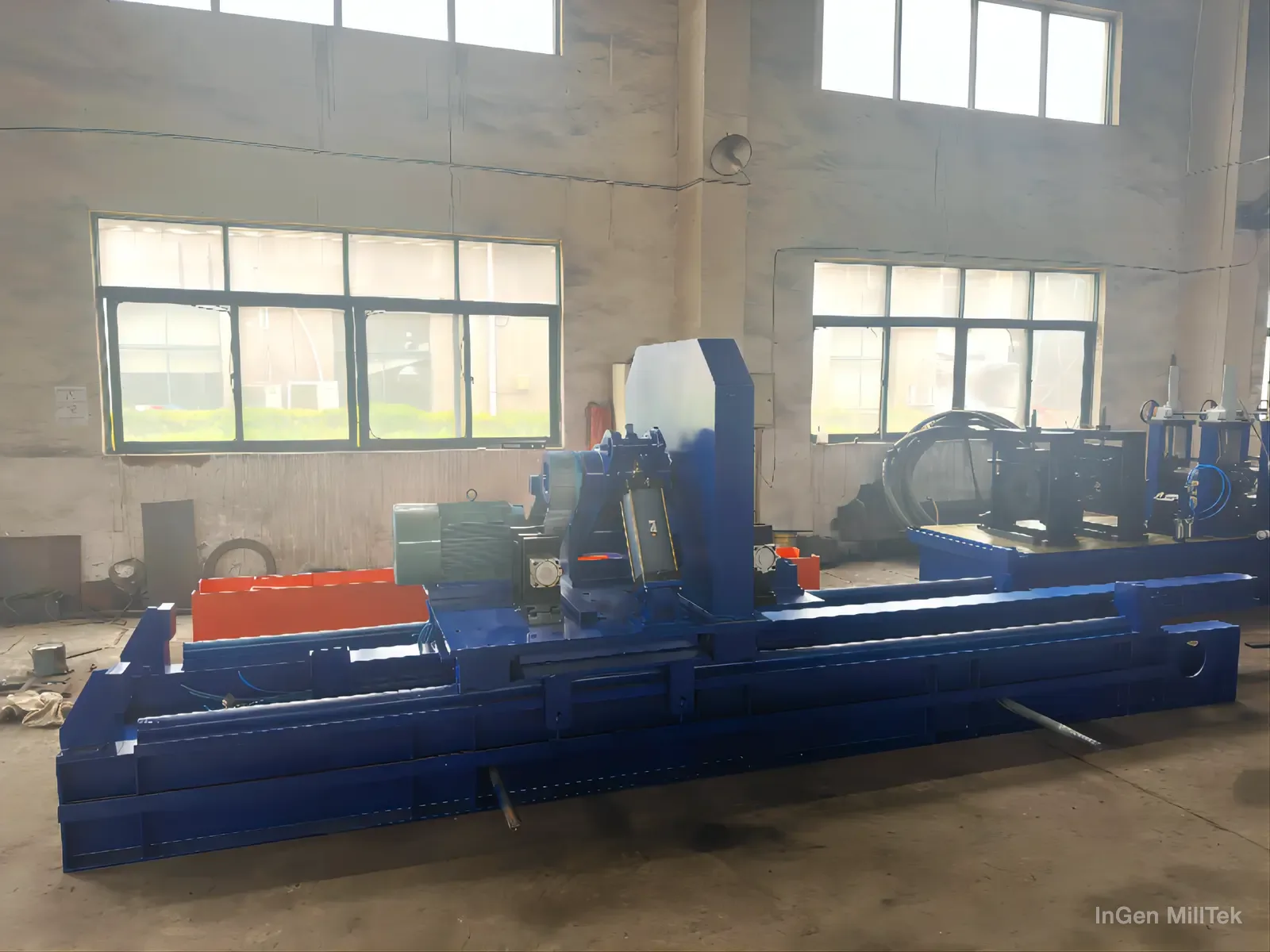
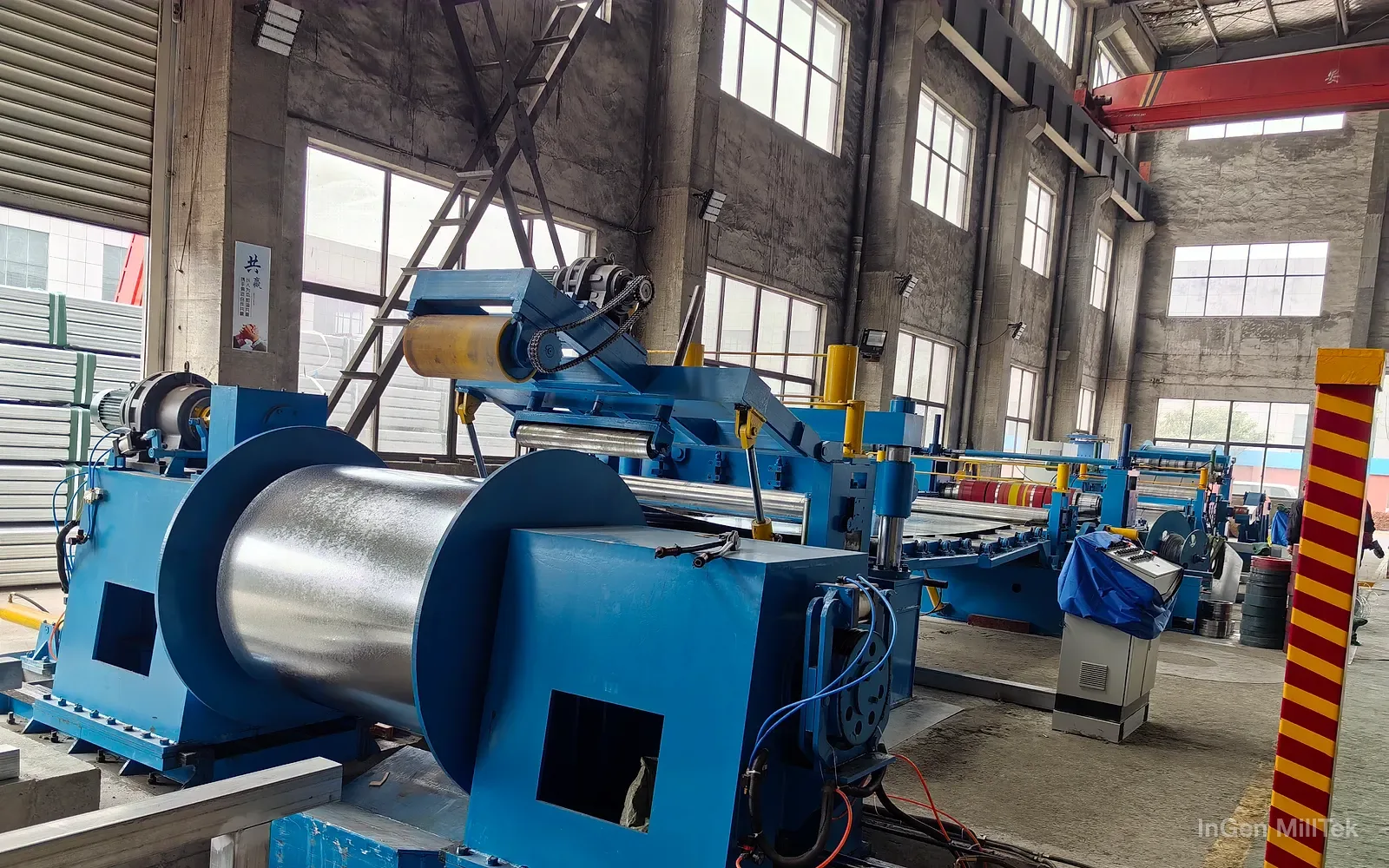
Following the strip through a tube mill: the uncoiler pays off the coil, the leveler flattens and guides it, the shear and butt welder joins the end of one coil to the start of the next, the spiral accumulator supplies stored strip through the coil change when usable storage and the joining cycle are matched, the forming and sizing mill rolls the strip into tube and welds and sizes it, and the flying saw cuts it to length. When wide coils are supplied, a slitting line cuts them to the required strip width beforehand.
The size of the entry equipment follows the same set of conditions: strip material, width and thickness, coil weight and diameters, and target line speed. Entry equipment is normally supplied as a set with the forming mill, but each machine is also supplied individually or as a replacement on an existing line, in which case we check the entry and exit directions, pass line height, available space and interfaces.
The equipment is listed below in four groups: entry section, mill section, cut-off section and strip preparation. Each page explains what the machine does, gives a specification table by model or type and lists the information needed for selection; spiral accumulators have their own page.
Do not select every auxiliary machine by the mill model alone. An uncoiler also depends on coil weight and bore; leveling and joining depend on material condition and joining requirements; accumulation must cover the actual entry interruption; and the saw must match the tube, cut length and line speed. Use one consistent set of material and finished-product requirements to avoid interface conflicts between separately selected machines.
For a replacement machine, first prepare an interface schedule covering material direction, pass-line height, adjacent equipment, electrical supply, controls and any cooling or compressed-air requirements. State which parts are retained and which are replaced. Confirm individual-machine capability and integrated line operation separately.
Entry, mill and cut-off sections, and strip preparation
Photographs come from the company archive or former website; configuration is decided per project.
Entry section
Uncoiler to accumulator, supplied with a complete line or as single machines for an existing mill.
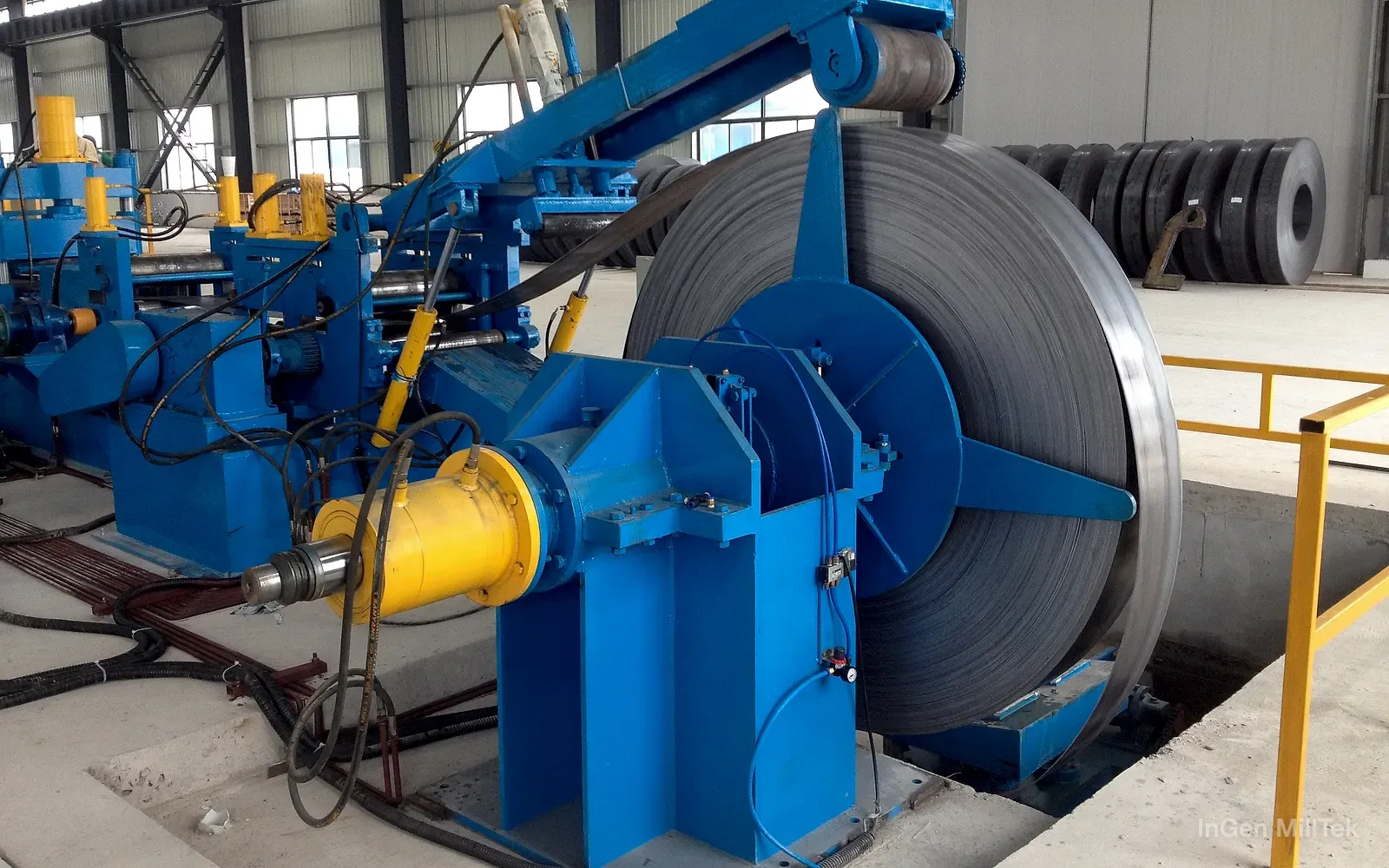 COIL FEEDING · Single-head, double-head, double top-cone Uncoilers The uncoiler holds the steel coil and pays off strip as the entry section requires. It is the first machine in a tube mill, slitting or cold roll-forming line.
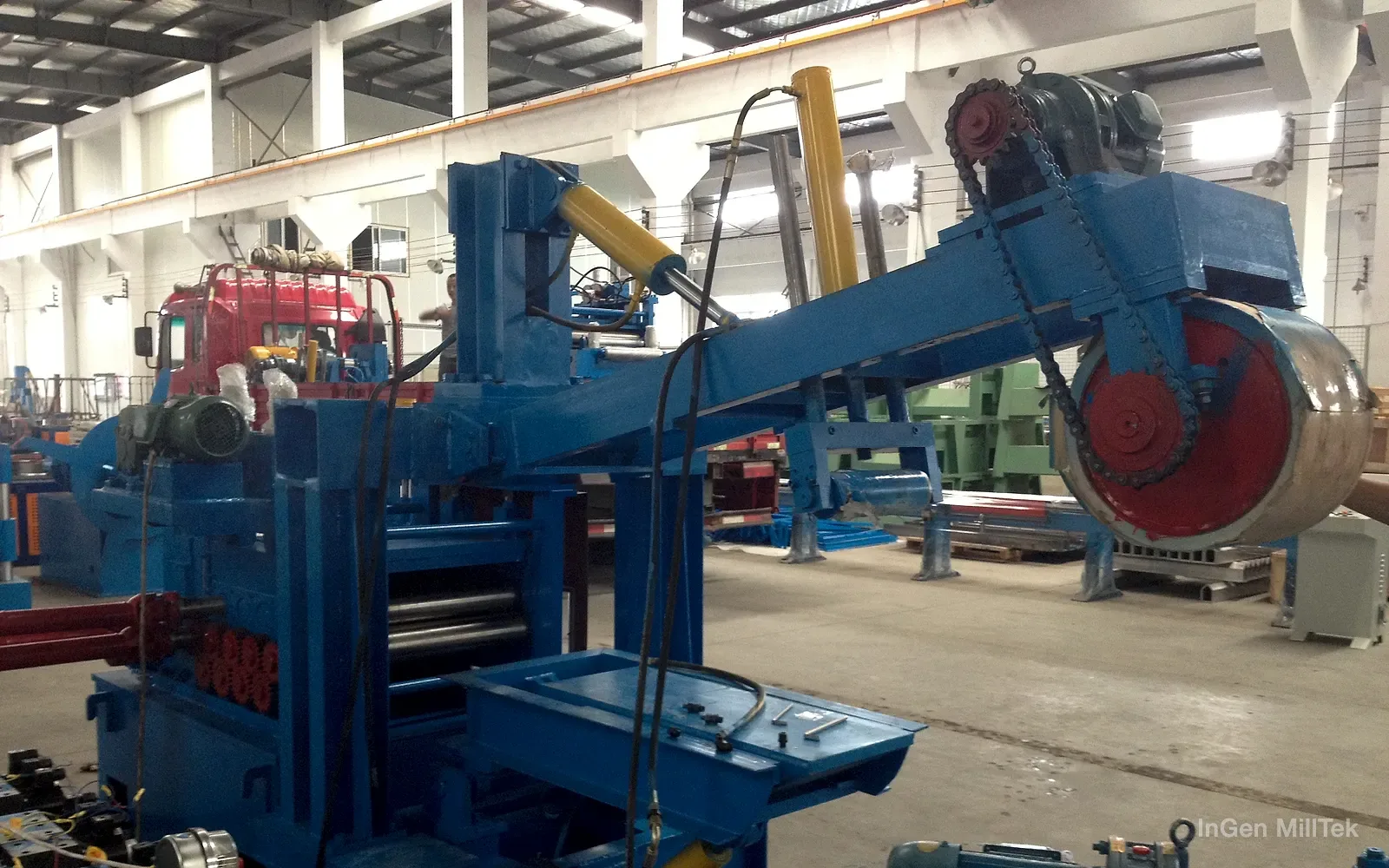 STRIP LEVELING · 5- to 8-roll, 15-roll Leveling Machines The leveler flattens and straightens the strip after uncoiling and feeds the leading end into the shear and butt welder.
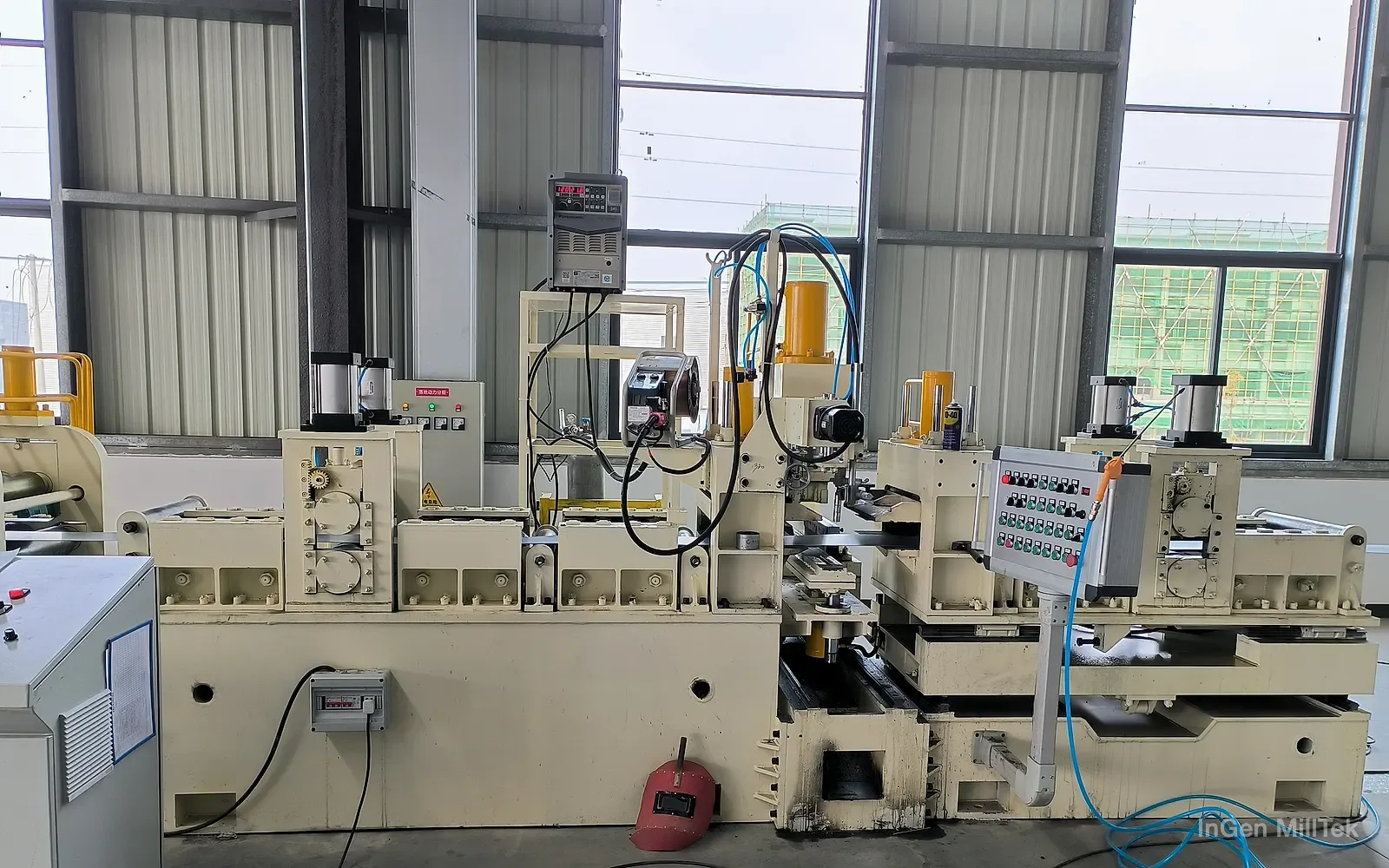 STRIP JOINING · Integrated manual, semi-automatic, fully automatic Shear & Butt Welders At a coil change, the shear and butt welder trims and joins the strip ends. When its cycle fits usable accumulator storage, downstream production continues.
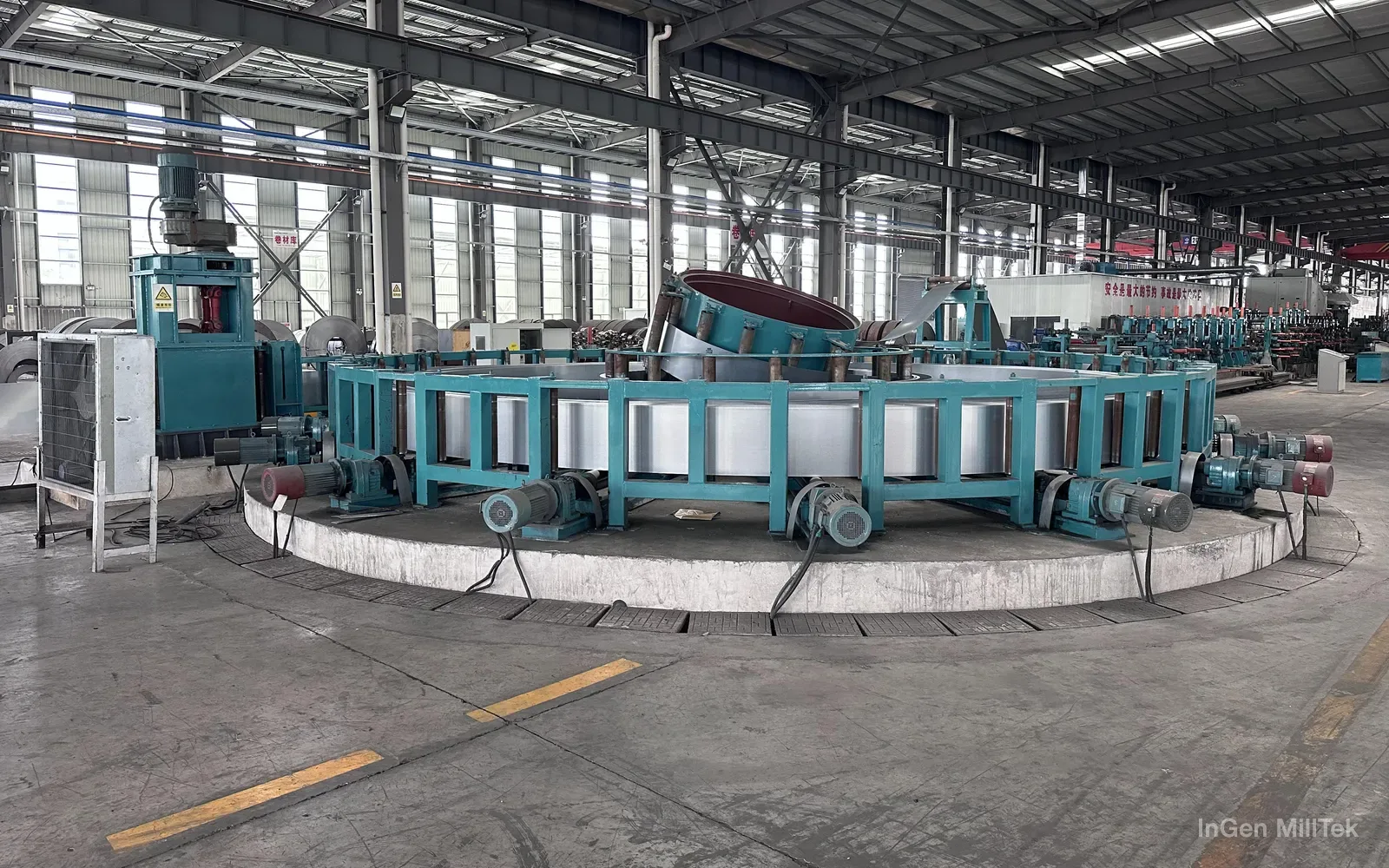 STRIP STORAGE · Horizontal and floor type Spiral Accumulators A spiral accumulator supplies stored strip during coil changes and joining. Available running time depends on usable storage, line speed and the joining cycle.
Mill section
The forming and sizing mill: roll forming and sizing to the required tube section.
Cut-off section
The flying saw, which travels with the tube and cuts it to length.
Strip preparation
Cuts wide coils to the strip width needed before tube making.
Questions buyers ask
- How is the price determined?
- By the tube specifications you need to produce and the equipment configuration; there is no list price. Send us your requirements and we will quote for your project.
- What should I include in an enquiry?
- For a complete line: the tube diameter range, thickness range and material. For entry equipment: material, strip width range, thickness range and line speed.
- What is the typical delivery time?
- Single machines from about 60 days, complete lines about 120 days, subject to contract.
- How long a building does a complete line need?
- It depends on the diameter range, production speed and line configuration, so we work it out with you for each project.
- Can you send engineers for installation and commissioning abroad?
- Yes. Our engineers guide installation and commissioning on site; costs are agreed per project.
- Can you make stainless steel tube?
- Yes. Stainless grades and sizes are assessed case by case; please mention them in your enquiry.
Tell us your material, tube profile and output
We discuss the suitable model and configuration for your product and plant. Every line is configured per project, and pricing follows the configuration.