ERW Pipe Making Process: From Steel Coil to Finished Tube
ERW pipe is cold-formed from steel strip and HF-welded without filler metal. This guide follows each tube mill stage, from coil to finished tube.
Read article01 · STRIP PREPARATION
The slitting line cuts wide coils lengthwise into strips of set width and recoils them, preparing the strip that tube mills and roll-forming lines need.
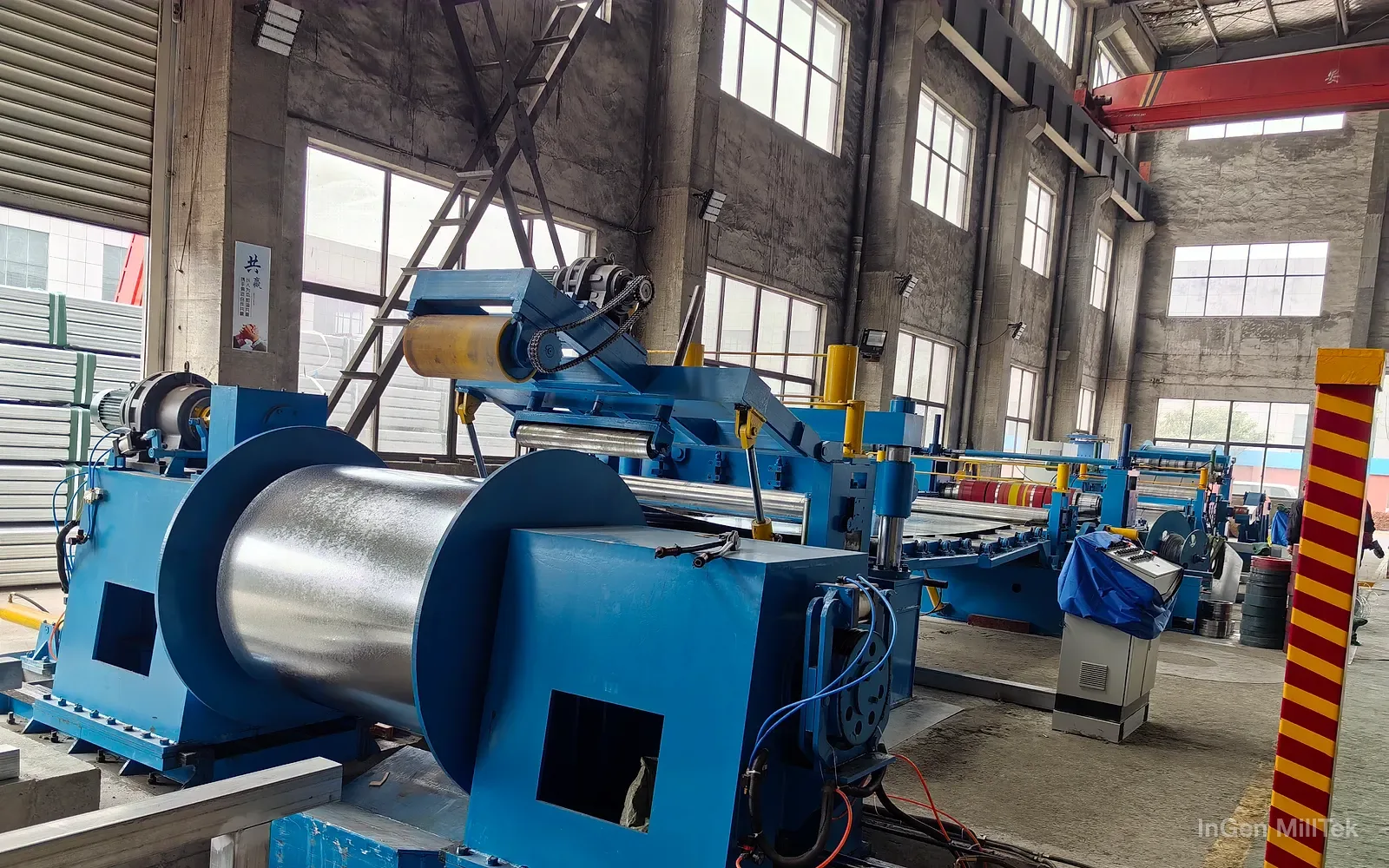
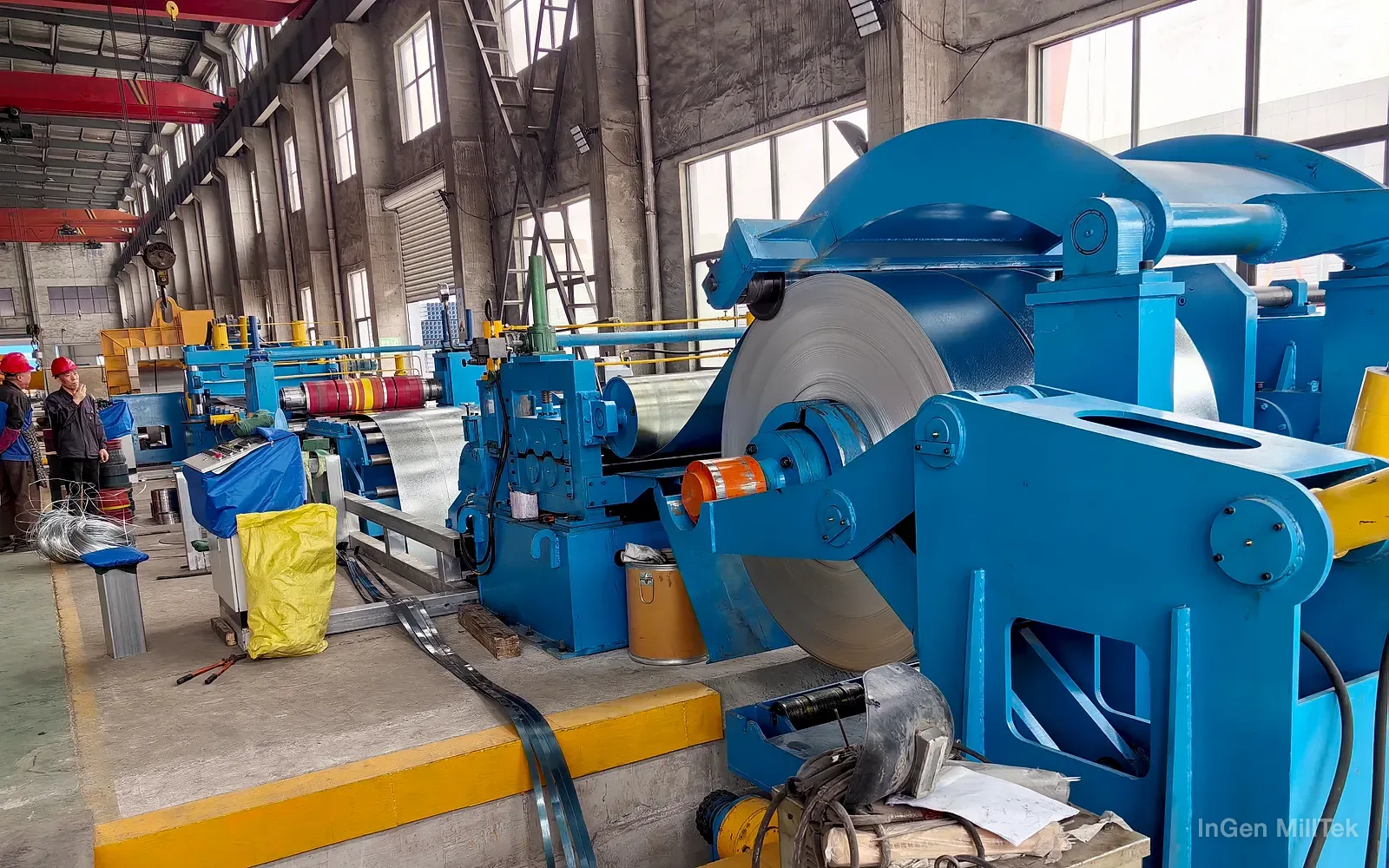
The required strip width depends on tube shape, dimensions, wall thickness and the forming process; incoming wide coils need slitting when they do not match the required strip width. A slitting line consists of an uncoiler, a feed guide, the slitter, a scrap winder, a tensioning device and a recoiler. The uncoiler carries and unwinds the coil, the slitter cuts the sheet lengthwise into strips with circular knives, the tensioning device establishes the required recoiling tension in coordination with slitting and recoiling, and the recoiler winds the strips back into coils.
Selection depends on the incoming width and thickness, the coil weight, and the slit widths, number of strips and edge requirements. Some models are configured for different speeds according to strip thickness: thin material can be slit at high speed, thick material at lower speed. The maximum width, thickness and speed of each model are listed in the table below.
Whether to run your own slitting line or buy slit strip depends on volume and how often sizes change: tube plants with many sizes and high output usually slit in-house. Please share your coil data, the planned slitting program and the workshop layout.
Define each slitting pattern using material grade and thickness, incoming coil width, target strip widths, number of strips and edge-trim arrangement. Maximum incoming width or a thickness range alone does not confirm every cutting pattern. Edge and recoiling requirements should match the downstream tube-making or forming process.
Also clarify knives and spacers, finished slit-coil requirements, coil loading and unloading, and maintenance access. Inspect width, edges and coil condition against the agreed material and slitting pattern. State the operating conditions associated with a speed figure so that comparisons remain meaningful.
Contact us to confirm specifications for your production requirements.
| Model | Max. strip width mm | Strip thickness mm | Line speed m/min |
|---|---|---|---|
| FT250 | 250 | ≤4 | 70 |
| FT800 | 800 | ≤4 | 70 |
| FT1000 | 1000 | ≤4 | 100 |
| FT1000 | 1000 | ≤8 | 30 |
| FT1250 | 1250 | ≤4 | 100 |
| FT1250 | 1250 | ≤8 | 30 |
| FT1600 | 1600 | ≤4 | 80 |
| FT1600 | 1600 | ≤8 | 30 |
The same model is configured for different speeds by strip thickness; coil weight and diameters are confirmed per project.
Source: company product list, 2023 edition, reconfirmed in September 2026.
Use these points to prepare the equipment discussion. Specifications and configuration depend on the project.
We discuss the suitable model and configuration for your product and plant. Every line is configured per project, and pricing follows the configuration.