10 Steps to Specify an ERW Tube Mill: Tube Size to Full Line
Choose the mill model from your maximum OD and wall thickness, then use strip, material, coil, speed, cutting, power and site data to define the full line.
Read article07 · CUT TO LENGTH
The flying saw tracks the moving tube and cuts it to length. Continuous cutting needs the full saw cycle matched to the tube size, line speed and cut length.
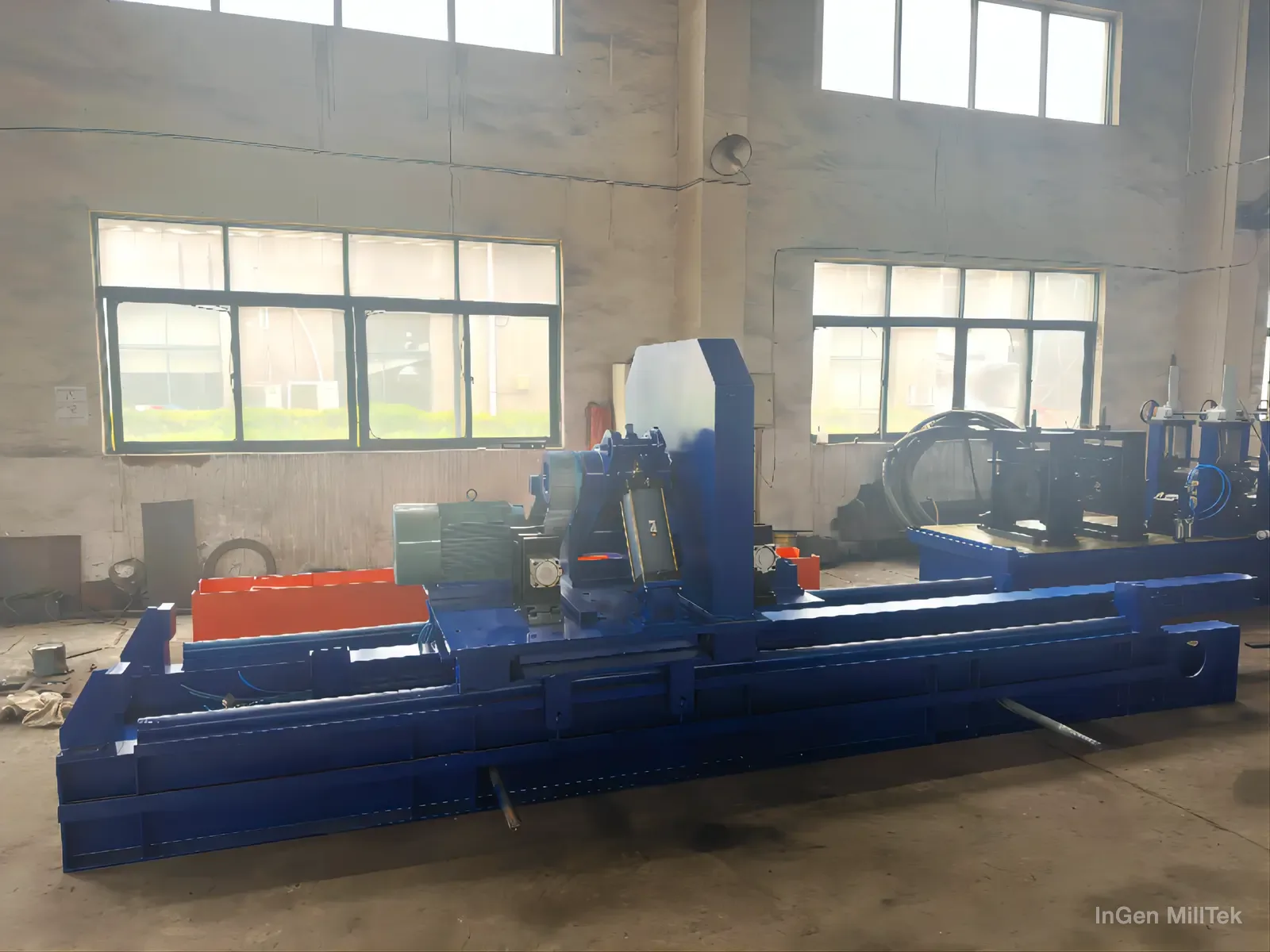
 Illustrative render Its place in the line
Tube leaves the mill as a continuous length. The saw carriage accelerates to the speed of the tube, cuts it to the set length while moving with it, then returns to wait for the next cut. Good synchronization, a reliable mechanical drive, a clean cut and accurate length are what a flying saw has to deliver.
The twelve flying-saw models in the table below (YJFJ-20 to YJFJ-273) correspond to the mill models of the same size; actual compatibility still requires checking tube shape, dimensions, wall thickness, material, line speed and cut length together, rather than relying on the model name alone. To select one, tell us the tube shape, size, wall thickness and material, the cut length and its tolerance, and the line speed. The faster the line and the shorter the length, the tighter the cutting cycle and the more demanding the carriage and clamping configuration. The range of each model is in the table below.
A run-out table usually follows the flying saw to convey and collect the cut tubes. On a complete line the saw is configured together with the mill and the run-out table; when replacing a saw on an existing line we check the pass line height, the cutting center line and the distance to neighboring machines.
Assess the complete repeatable cycle: acceleration and synchronization, clamping, cutting, withdrawal and release, return, and readiness for the next cut. Tracking speed is only one condition. At the same line speed, a short cut length leaves less time for each cycle, so a result for a longer length cannot be applied automatically.
The proposal and acceptance plan should state tube specification, material, target line speed, cut length, length tolerance and cut-end requirements together, along with the conditions for checking repeated cuts. Run-out and collection also need to match the cycle to avoid accumulation at the exit.
Used in these lines Tube mill lines · 12 models, complete lines
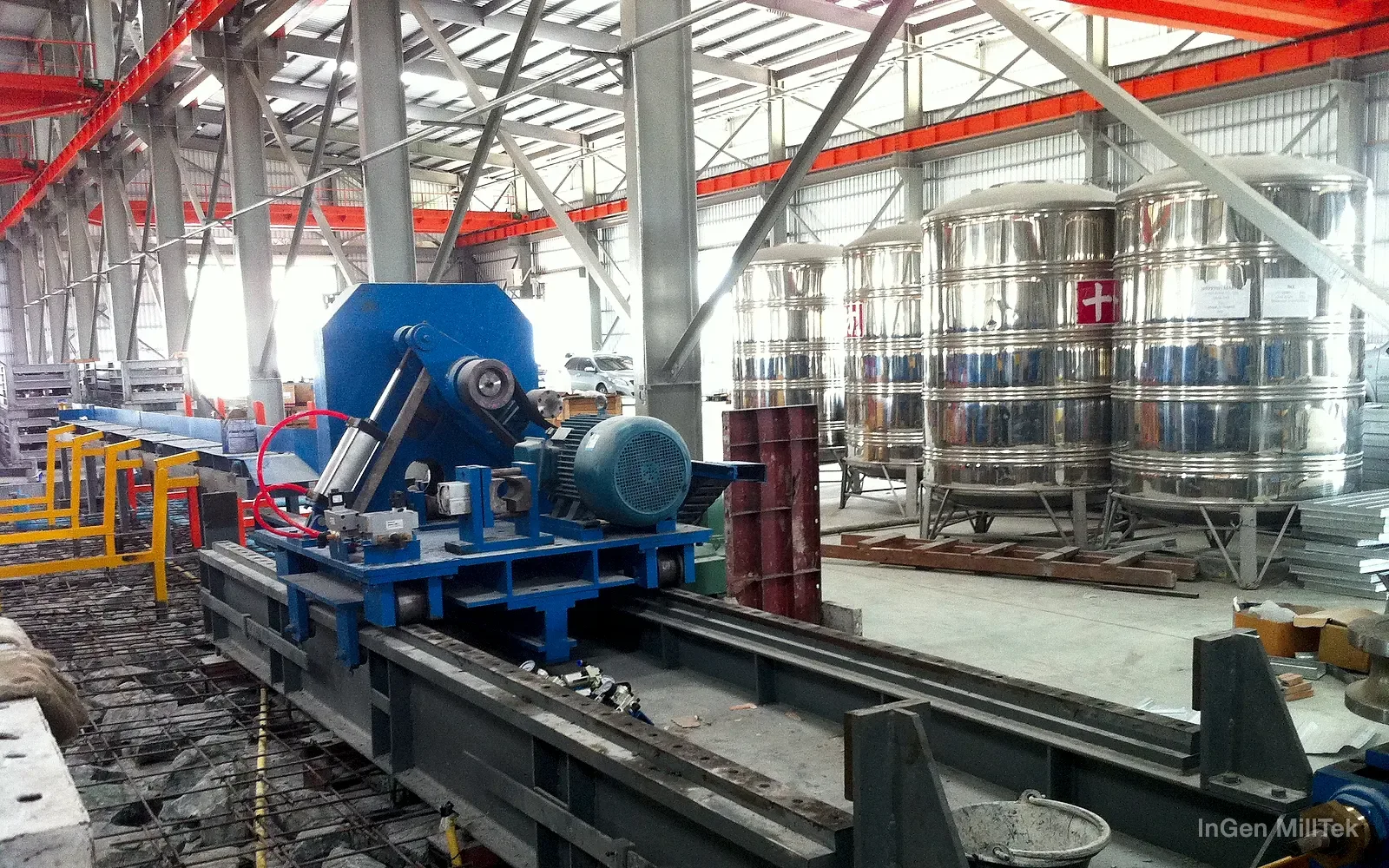
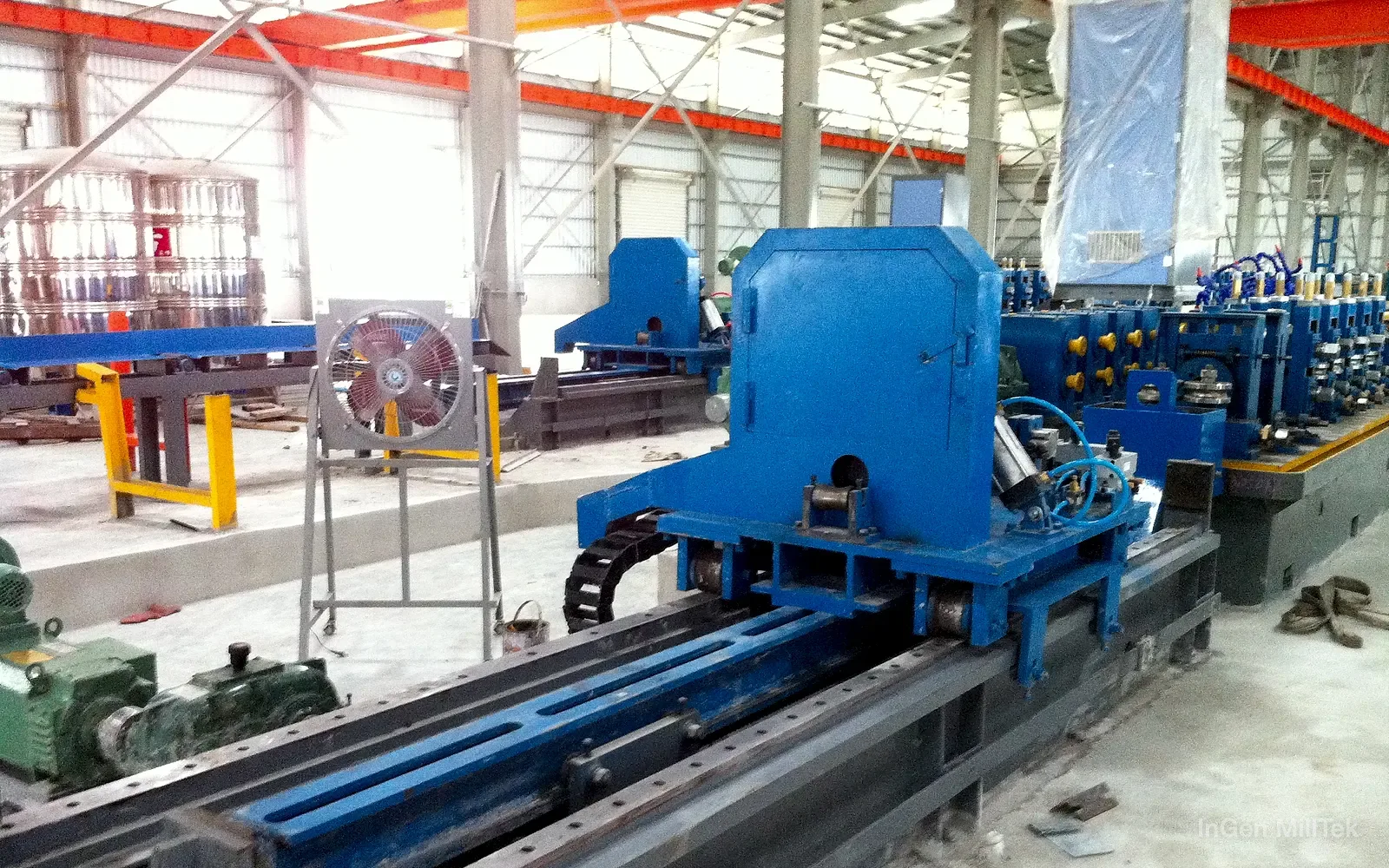
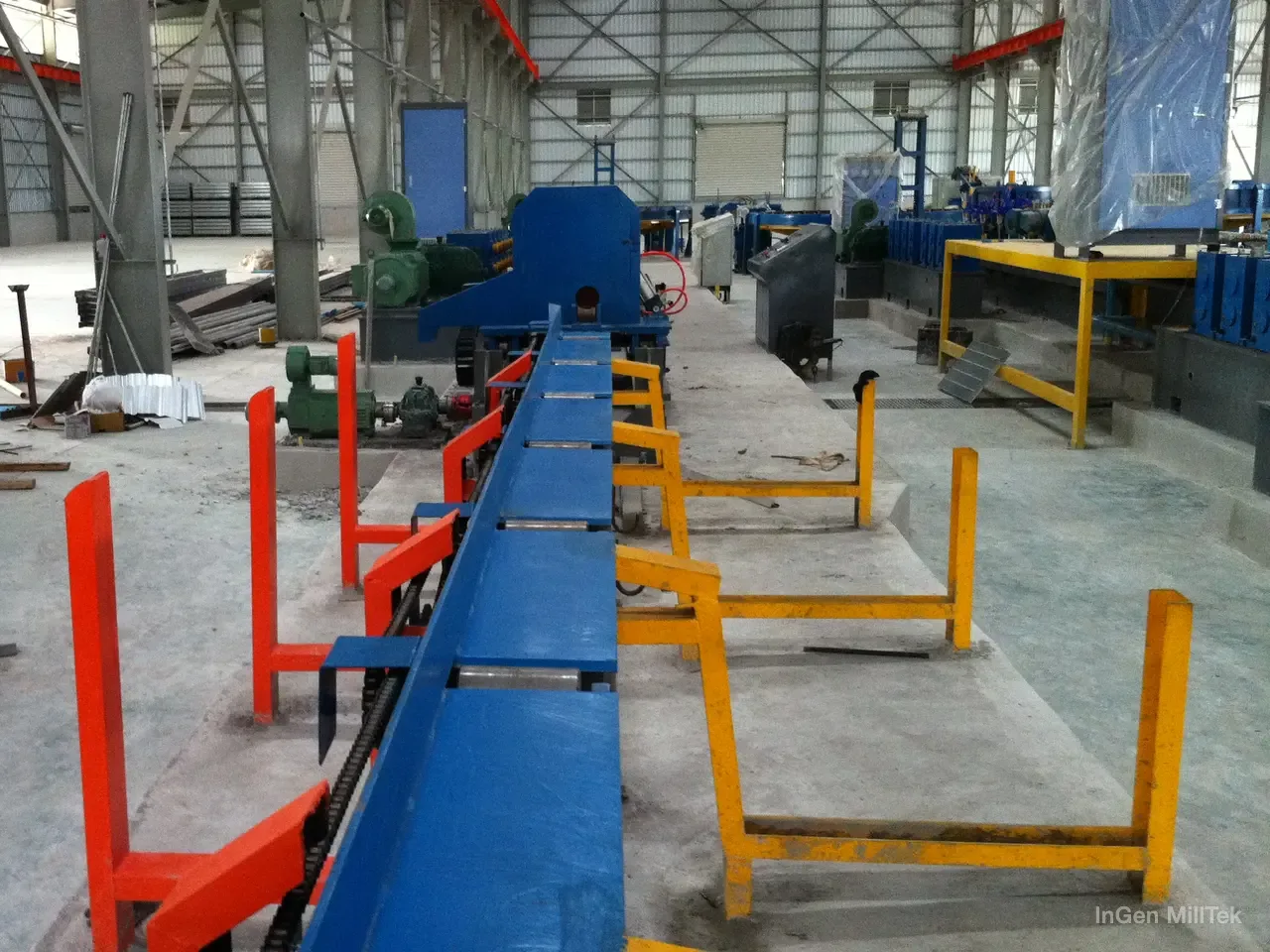
Actual specifications depend on the material and final equipment configuration.
| Model | Round tube OD mm | Wall mm | Square tube mm | Wall mm | Rectangular tube mm | Wall mm | Line speed m/min |
|---|---|---|---|---|---|---|---|
| YJFJ-20 | Φ10–25.4 | 0.4–1.5 | 8×8–20×20 | 0.4–1.0 | 10×6–25×15 | 0.4–1.0 | 0–100 |
| YJFJ-32 | Φ12.7–38.1 | 0.4–2.0 | 10×10–30×30 | 0.4–1.5 | 12×8–40×20 | 0.4–1.5 | 0–120 |
| YJFJ-50 | Φ19.1–63.5 | 0.6–3.0 | 15×15–50×50 | 0.6–2.5 | 20×10–60×40 | 0.6–2.5 | 0–100 |
| YJFJ-76 | Φ38.1–89 | 0.8–3.5 | 30×30–70×70 | 0.8–3.0 | 40×20–80×60 | 0.8–3.0 | 0–80 |
| YJFJ-89 | Φ50–102 | 1.0–4.0 | 40×40–80×80 | 1.0–3.5 | 50×30–90×70 | 1.0–3.5 | 0–70 |
| YJFJ-102 | Φ50–114 | 1.2–4.5 | 40×40–90×90 | 1.2–4.0 | 50×30–100×80 | 1.2–4.0 | 0–70 |
| YJFJ-114 | Φ63.5–127 | 1.5–5.0 | 50×50–100×100 | 1.5–4.2 | 60×40–120×80 | 1.5–4.2 | 0–60 |
| YJFJ-127 | Φ63.5–140 | 1.5–5.0 | 50×50–110×110 | 1.5–4.5 | 60×40–130×90 | 1.5–4.5 | 0–60 |
| YJFJ-165 | Φ76–165 | 1.5–6.0 | 60×60–130×130 | 1.5–5.0 | 70×50–150×110 | 1.5–5.0 | 0–50 |
| YJFJ-219 | Φ89–219 | 2.0–8.0 | 70×70–170×170 | 2.0–7.0 | 80×60–190×150 | 2.0–7.0 | 0–50 |
| YJFJ-254 | Φ114–254 | 3.0–9.0 | 90×90–200×200 | 3.0–7.5 | 100×80–250×150 | 3.0–7.5 | 0–40 |
| YJFJ-273 | Φ140–273 | 4.0–10.0 | 110×110–215×215 | 4.0–8.5 | 130×90–250×180 | 4.0–8.5 | 0–30 |
Each flying saw model in this table matches the tube mill model of the same size.
The YJ-219, YJ-254 and YJ-273 tube mills that the YJFJ-219, YJFJ-254 and YJFJ-273 saws pair with are designed and built to order.
Further standard and custom models are available on request.
Source: company product catalogue (April 2025 edition), page 15.
Use these points to prepare the equipment discussion. Specifications and configuration depend on the project.
We discuss the suitable model and configuration for your product and plant. Every line is configured per project, and pricing follows the configuration.