Complete high-frequency tube mill lines · 12 models
Tube Mill Lines
Choose a model by finished tube size. We deliver the complete line, from uncoiler and spiral accumulator to forming and sizing, HF welding and the flying saw.
- Φ10–273mm round-tube OD range
- 0–120m/min production speed, by model
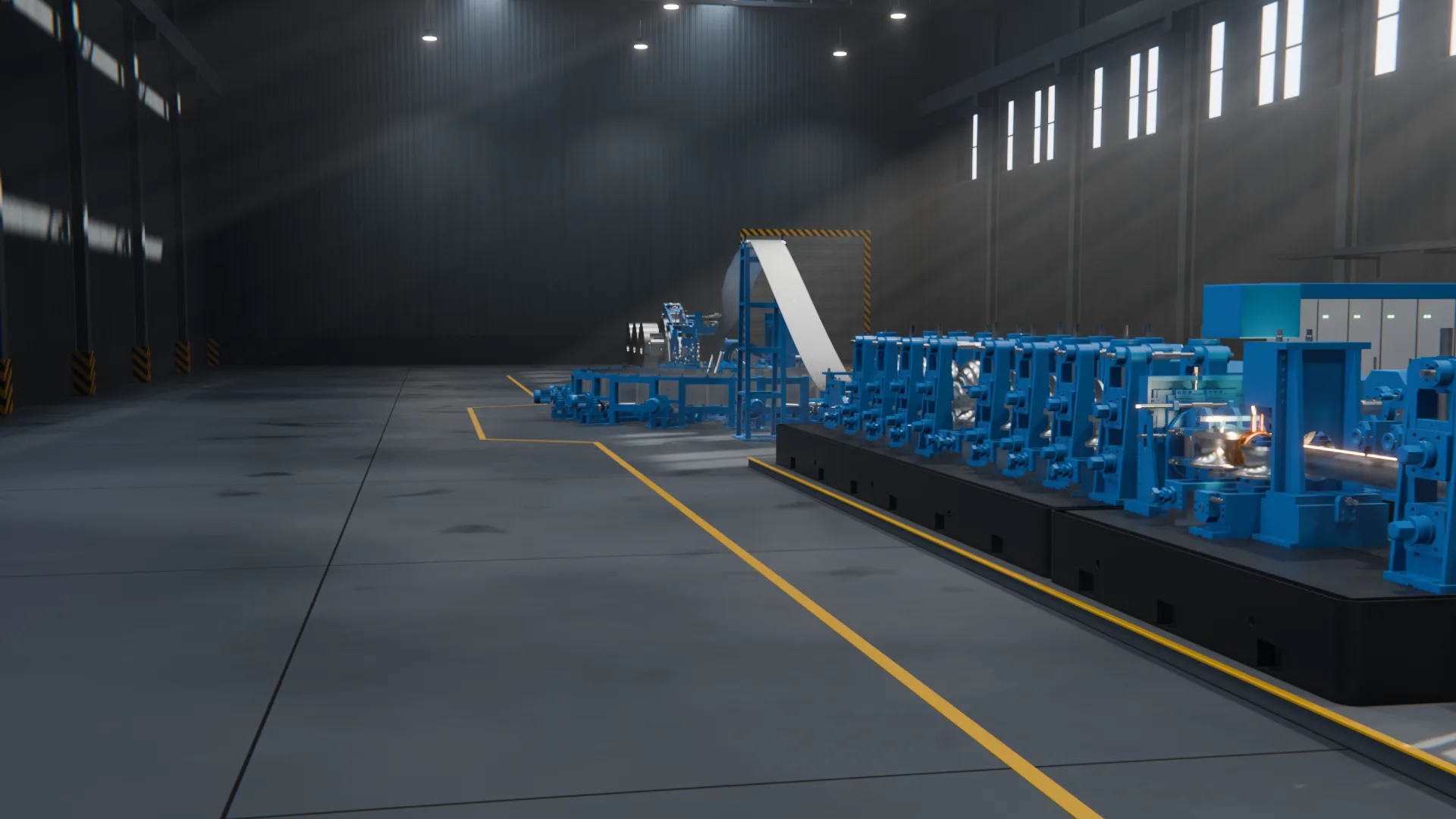
Illustrative render of a generic workshop · proportions and configuration vary by project
From strip to finished tube
A high-frequency tube mill rolls strip into a tube blank, welds it by high-frequency induction, sizes and straightens it and cuts it to length, producing round, square and rectangular tube. A complete line typically consists of the entry equipment (uncoiler, leveler, shear and butt welder, spiral accumulator), the forming and sizing mill, the high-frequency welder, the flying saw and the run-out table.
The model number is the nominal tube diameter. The actual diameter, wall thickness and speed range of each model is in the specification table further down this page. These limits cannot be combined arbitrarily: confirm the available speed for each product against its material, welding, cooling and cutting conditions rather than inferring it from diameter or wall thickness alone. For thin-wall products slightly beyond a model's range we can discuss a widened mill, which uses the stands of a smaller model to make larger-diameter thin-wall tube instead of over-sizing the line.
Start with the tube you want to make: material, round or square and rectangular, size and wall thickness range, end use and quality requirements; then the target speed, cut length and how often sizes change. You do not need to pick a model first. Describe the product and we will define the model and the line configuration. Lines are built to order, so pricing follows the configuration.
To make the proposal reflect your actual production, separate regular products from occasional products near the limits. Provide material grades, size and wall-thickness combinations, finished lengths and tolerances. Maximum diameter, maximum thickness and maximum speed describe different limits and should not be assumed to apply simultaneously; confirm the required combinations individually.
Line selection also involves coil joining, accumulator storage, welding and cooling, the flying-saw cycle and run-out handling. Confirm motor power, HF power-source ratings and incoming electrical capacity separately. Define cooling flow, pressure, temperatures and heat-rejection boundaries.
For a candidate mill, define the supply scope for equipment, rollers and tooling, controls and site interfaces, together with the materials and tube specifications used for acceptance. Start a new-line discussion with a product list. For retrofits, also provide information on retained equipment, pass-line height and control interfaces.
What a complete line consists of
Complete tube mill lines — designed, built and delivered by us.
- 01 Uncoilers
- 02 Leveling Machines
- 03 Shear & Butt Welders
- 04 Spiral Accumulators
- 05 Forming & Sizing Units
- 06 HF welding
- 07 Flying Saws
- 08 Run-out table
How the strip is formed
At the heart of a tube mill is continuous roll forming: the strip is bent stand by stand, its edges meet and are welded by high-frequency induction, then the tube is sized and straightened.
- 1–4 Breakdown · open passes
- 5–7 Fin passes · closed passes
- Weld HF induction heating, squeeze rollers close the seam
- Size Sizing and straightening to the finished size
Choose by tube size
Enter a round-tube OD to highlight the models that cover it. OD, wall and speed are separate ranges per model, not simultaneous limits.
12 models
The model number indicates the nominal tube size. Each card draws the smallest and largest round tube of the model at one common scale; only reviewed ranges are listed. YJ-219, YJ-254 and YJ-273 are large-diameter models, designed and built to order.
- Φ10–25.4 mm YJ-20 ERW Tube Mill Round OD Φ10–25.4 mm Wall 0.4–1.5 mm Speed 0–100 m/min
- Φ12.7–38.1 mm YJ-32 ERW Tube Mill Round OD Φ12.7–38.1 mm Wall 0.4–2.0 mm Speed 0–120 m/min
- Φ19.1–63.5 mm YJ-50 ERW Tube Mill Round OD Φ19.1–63.5 mm Wall 0.6–3.0 mm Speed 0–100 m/min
- Φ38.1–89 mm YJ-76 ERW Tube Mill Round OD Φ38.1–89 mm Wall 0.8–3.5 mm Speed 0–80 m/min
- Φ50–102 mm YJ-89 ERW Tube Mill Round OD Φ50–102 mm Wall 1.0–4.0 mm Speed 0–70 m/min
- Φ50–114 mm YJ-102 ERW Tube Mill Round OD Φ50–114 mm Wall 1.2–4.5 mm Speed 0–70 m/min
- Φ63.5–127 mm YJ-114 ERW Tube Mill Round OD Φ63.5–127 mm Wall 1.5–5.0 mm Speed 0–60 m/min
- Φ63.5–140 mm YJ-127 ERW Tube Mill Round OD Φ63.5–140 mm Wall 1.5–5.0 mm Speed 0–60 m/min
- Φ76–165 mm YJ-165 ERW Tube Mill Round OD Φ76–165 mm Wall 1.5–6.0 mm Speed 0–50 m/min
- Φ89–219 mm YJ-219 ERW Tube Mill Designed and built to order Round OD Φ89–219 mm Wall 2.0–8.0 mm Speed 0–50 m/min
- Φ114–254 mm YJ-254 ERW Tube Mill Designed and built to order Round OD Φ114–254 mm Wall 3.0–9.0 mm Speed 0–40 m/min
- Φ140–273 mm YJ-273 ERW Tube Mill Designed and built to order Round OD Φ140–273 mm Wall 4.0–10.0 mm Speed 0–30 m/min
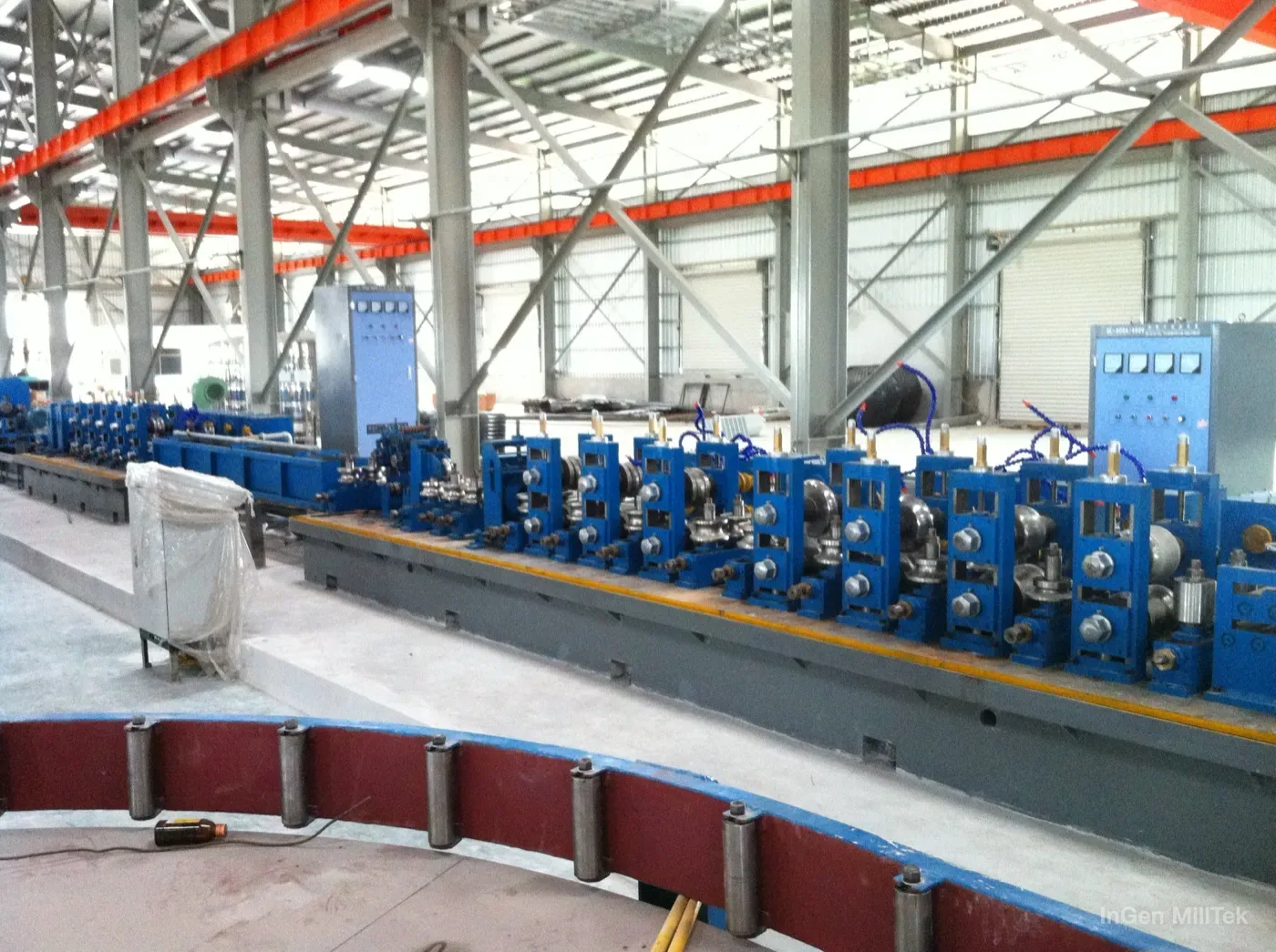
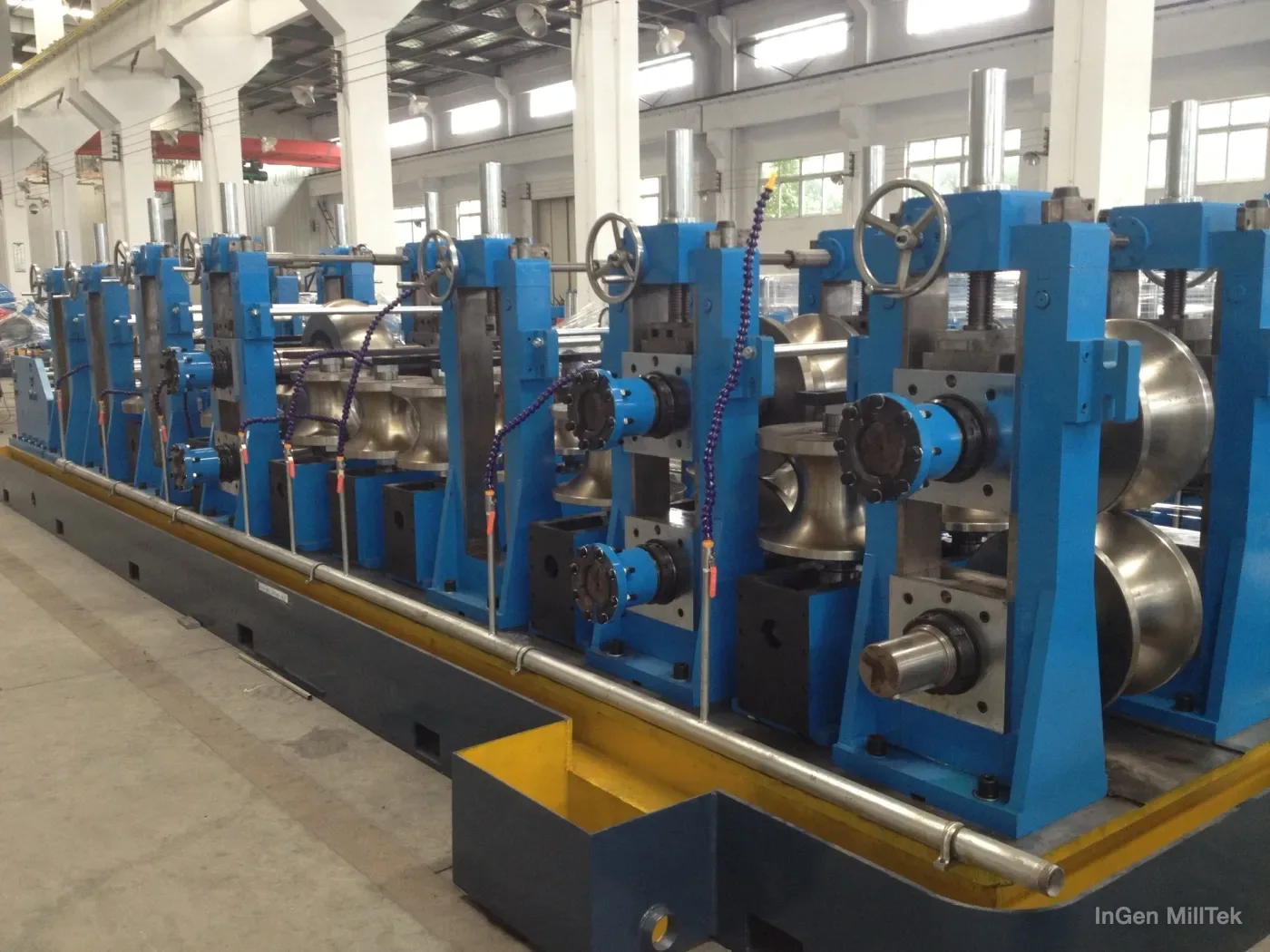
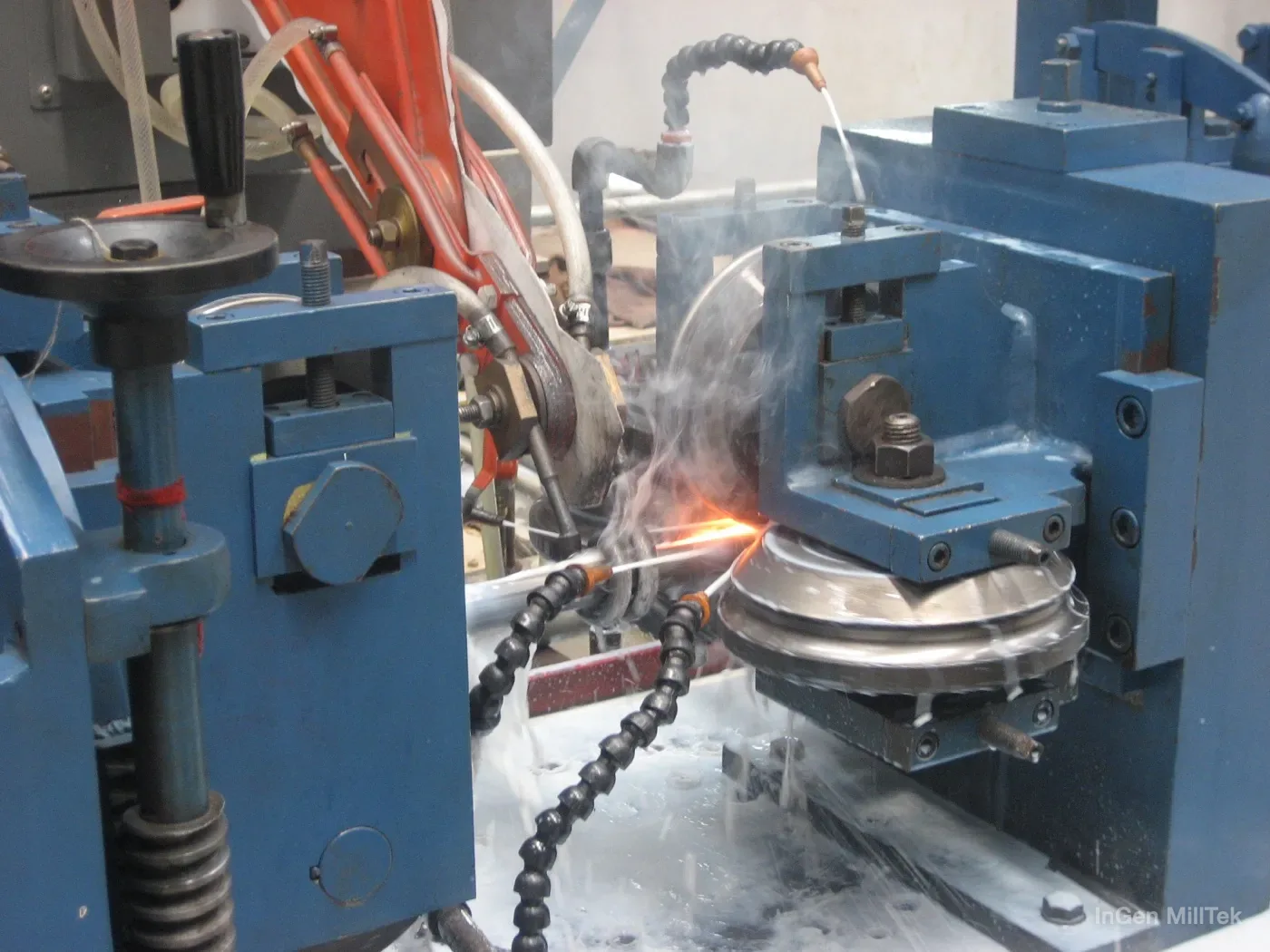
Photographs
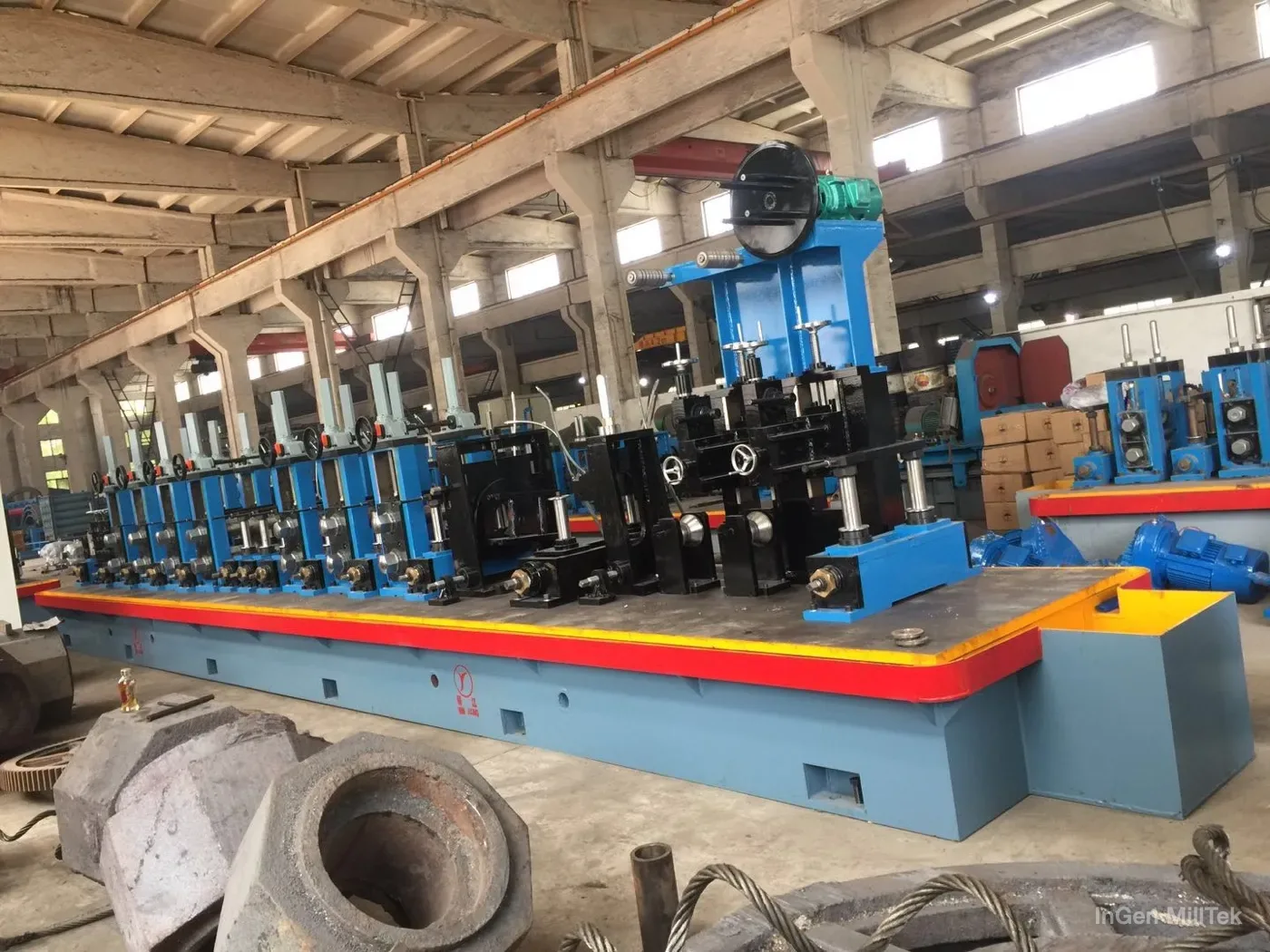
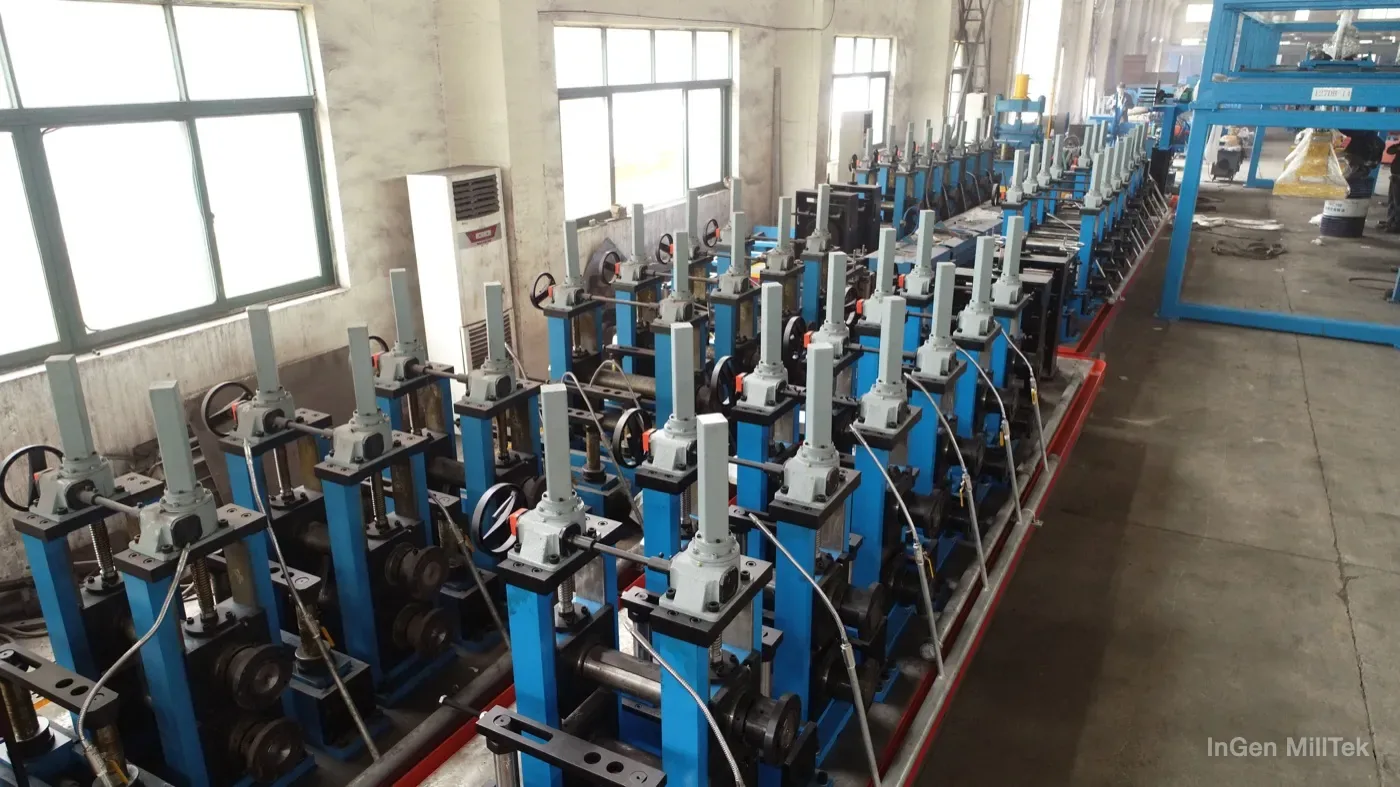
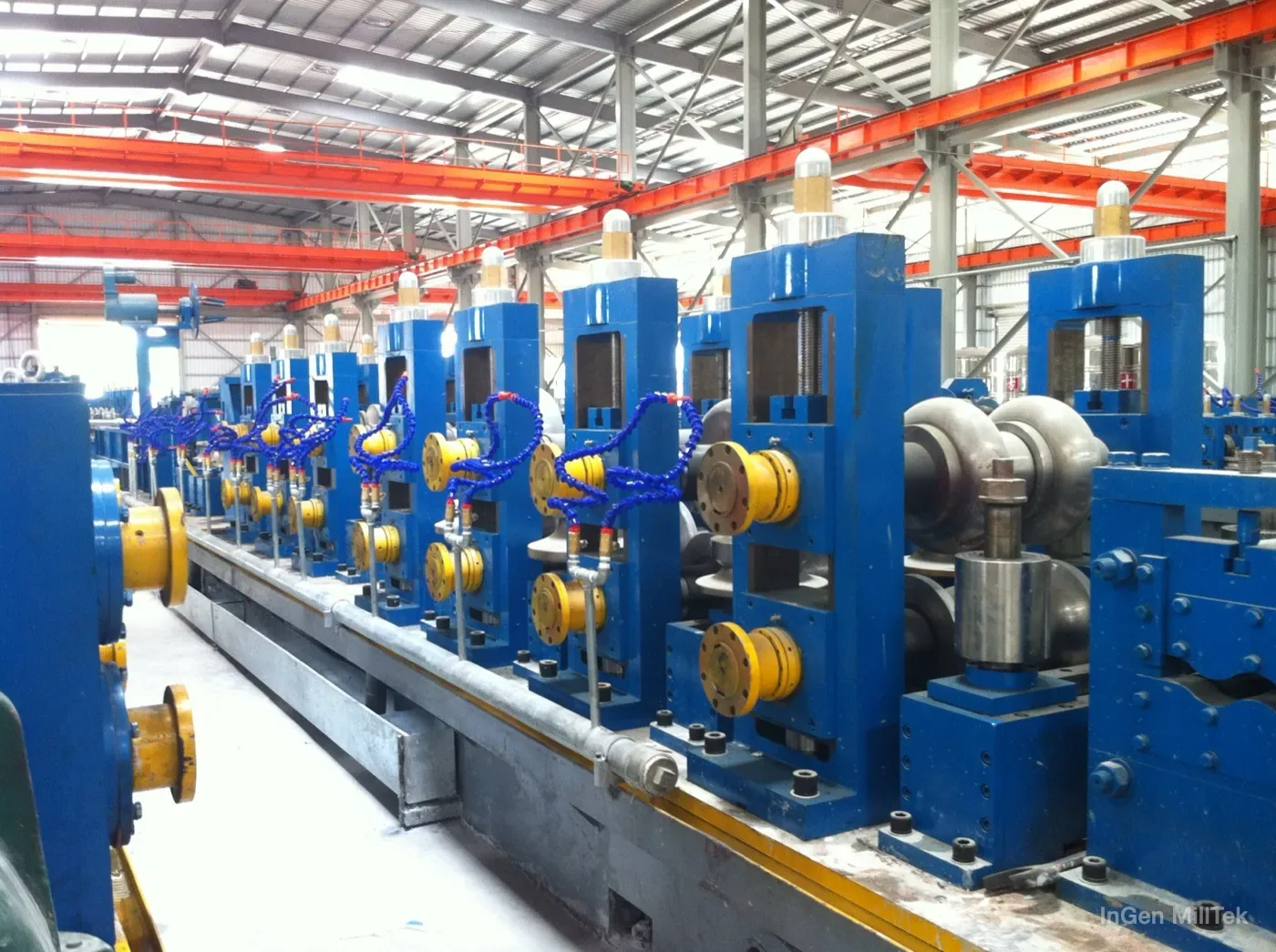
Tube mill photographs from the company archive: forming mill, forming stands, high-frequency welding and complete lines. They show equipment of this kind; model and configuration are set in each project's technical agreement.
Model comparison
| Model | Round tube OD mm | Wall mm | Square tube mm | Wall mm | Rectangular tube mm | Wall mm | Line speed m/min |
|---|---|---|---|---|---|---|---|
| YJ-20 | Φ10–25.4 | 0.4–1.5 | 8×8–20×20 | 0.4–1.0 | 10×6–25×15 | 0.4–1.0 | 0–100 |
| YJ-32 | Φ12.7–38.1 | 0.4–2.0 | 10×10–30×30 | 0.4–1.5 | 12×8–40×20 | 0.4–1.5 | 0–120 |
| YJ-50 | Φ19.1–63.5 | 0.6–3.0 | 15×15–50×50 | 0.6–2.5 | 20×10–60×40 | 0.6–2.5 | 0–100 |
| YJ-76 | Φ38.1–89 | 0.8–3.5 | 30×30–70×70 | 0.8–3.0 | 40×20–80×60 | 0.8–3.0 | 0–80 |
| YJ-89 | Φ50–102 | 1.0–4.0 | 40×40–80×80 | 1.0–3.5 | 50×30–90×70 | 1.0–3.5 | 0–70 |
| YJ-102 | Φ50–114 | 1.2–4.5 | 40×40–90×90 | 1.2–4.0 | 50×30–100×80 | 1.2–4.0 | 0–70 |
| YJ-114 | Φ63.5–127 | 1.5–5.0 | 50×50–100×100 | 1.5–4.2 | 60×40–120×80 | 1.5–4.2 | 0–60 |
| YJ-127 | Φ63.5–140 | 1.5–5.0 | 50×50–110×110 | 1.5–4.5 | 60×40–130×90 | 1.5–4.5 | 0–60 |
| YJ-165 | Φ76–165 | 1.5–6.0 | 60×60–130×130 | 1.5–5.0 | 70×50–150×110 | 1.5–5.0 | 0–50 |
| YJ-219 | Φ89–219 | 2.0–8.0 | 70×70–170×170 | 2.0–7.0 | 80×60–190×150 | 2.0–7.0 | 0–50 |
| YJ-254 | Φ114–254 | 3.0–9.0 | 90×90–200×200 | 3.0–7.5 | 100×80–250×150 | 3.0–7.5 | 0–40 |
| YJ-273 | Φ140–273 | 4.0–10.0 | 110×110–215×215 | 4.0–8.5 | 130×90–250×180 | 4.0–8.5 | 0–30 |
Square and rectangular sizes are side-length ranges. Size, wall thickness and speed are not independent combinations; actual capability depends on the material and final configuration.
Further standard and custom models are available on request.
Source: company product catalogue (April 2025 edition), page 12.
Questions buyers ask
- How is the price determined?
- By the tube specifications you need to produce and the equipment configuration; there is no list price. Send us your requirements and we will quote for your project.
- What should I include in an enquiry?
- For a complete line: the tube diameter range, thickness range and material. For entry equipment: material, strip width range, thickness range and line speed.
- What is the typical delivery time?
- Single machines from about 60 days, complete lines about 120 days, subject to contract.
- How long a building does a complete line need?
- It depends on the diameter range, production speed and line configuration, so we work it out with you for each project.
- Can you send engineers for installation and commissioning abroad?
- Yes. Our engineers guide installation and commissioning on site; costs are agreed per project.
- Can you make stainless steel tube?
- Yes. Stainless grades and sizes are assessed case by case; please mention them in your enquiry.
Tell us your material, tube profile and output
We discuss the suitable model and configuration for your product and plant. Every line is configured per project, and pricing follows the configuration.