10 Steps to Specify an ERW Tube Mill: Tube Size to Full Line
Choose the mill model from your maximum OD and wall thickness, then use strip, material, coil, speed, cutting, power and site data to define the full line.
Read article03 · STRIP LEVELING
The leveler flattens and straightens the strip after uncoiling and feeds the leading end into the shear and butt welder.
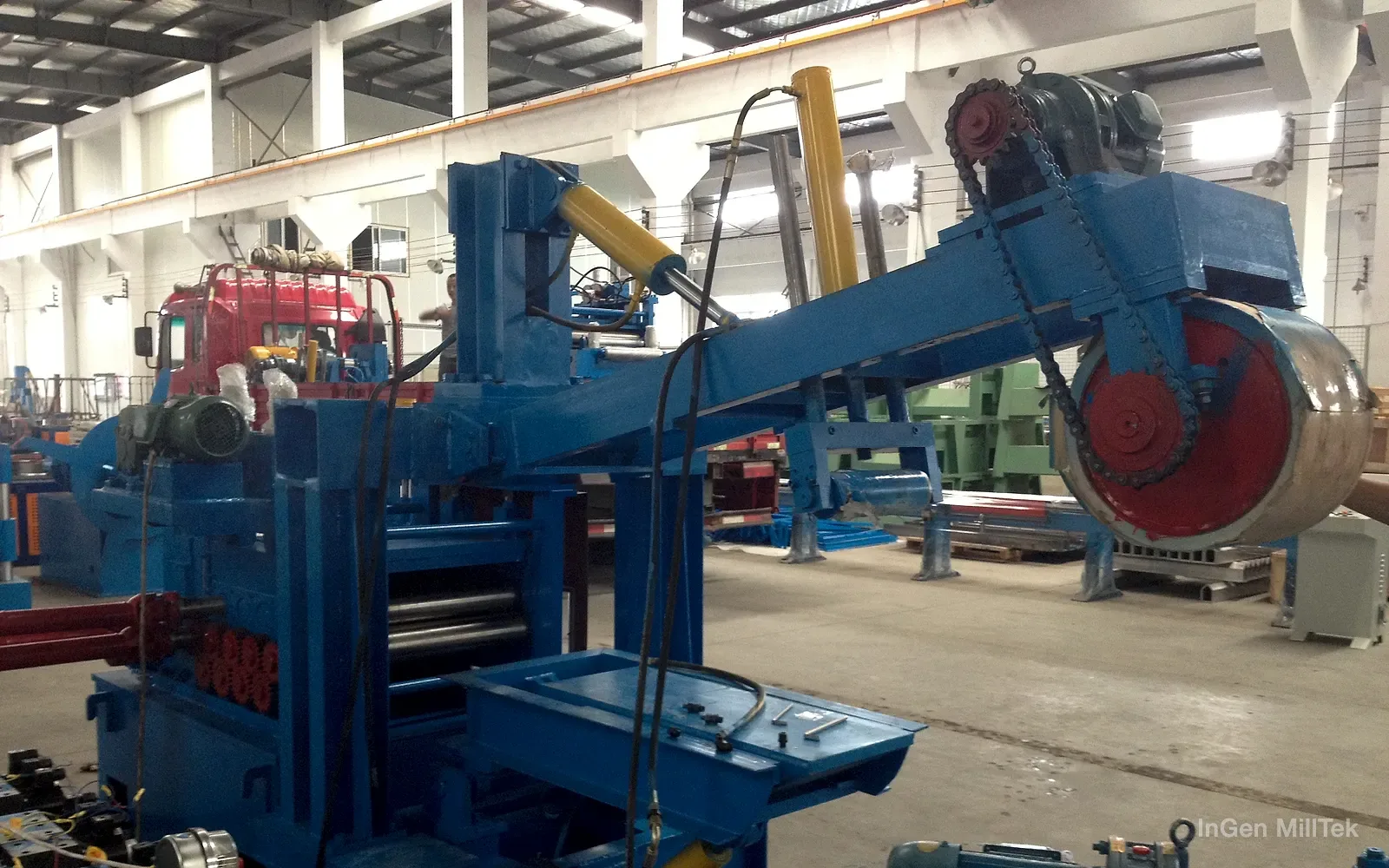
 Illustrative render Its place in the line
Strip comes off the coil with a curve. The leveler passes it between staggered rolls to flatten it and guides the leading end into the next machine. It consists of a drive unit, the leveling head, a shovel device and a straightening head. The shovel swings and extends to lift the head of a new coil into the rolls; the pressure head is adjusted to the coil size.
Select roll count, roll diameter and drive capacity against thickness, width, material strength and incoming condition; more rolls alone do not establish better leveling. We configure five-, six-, seven- and eight-roll levelers and a fifteen-roll continuous leveler against these conditions; the six-roll model comes with fine or coarse rolls. The thickness range of each type is in the table below.
To select a leveler, tell us the strip material, width, thickness range and incoming condition, and the flatness the next operation needs. As part of a tube mill entry section the leveler is matched with the uncoiler and the shear and butt welder. When replacing a leveler on an existing line we also check the feed direction, pass line height and the interfaces to neighboring machines.
Strips of the same thickness may have different strength and incoming condition, so thickness alone is not enough to select roll diameter or roll count. Provide the grade, available mechanical-property information, width/thickness combinations and the main coil-set problems before confirming suitability.
Entry leveling, end straightening and feeding requirements should match the joining operation. During the trial run, the agreed material and incoming condition are used to check threading, feeding and preparation for joining. Any additional flatness requirement needs its own inspection method and acceptance conditions.
Used in these lines Tube mill lines · 12 models, complete lines
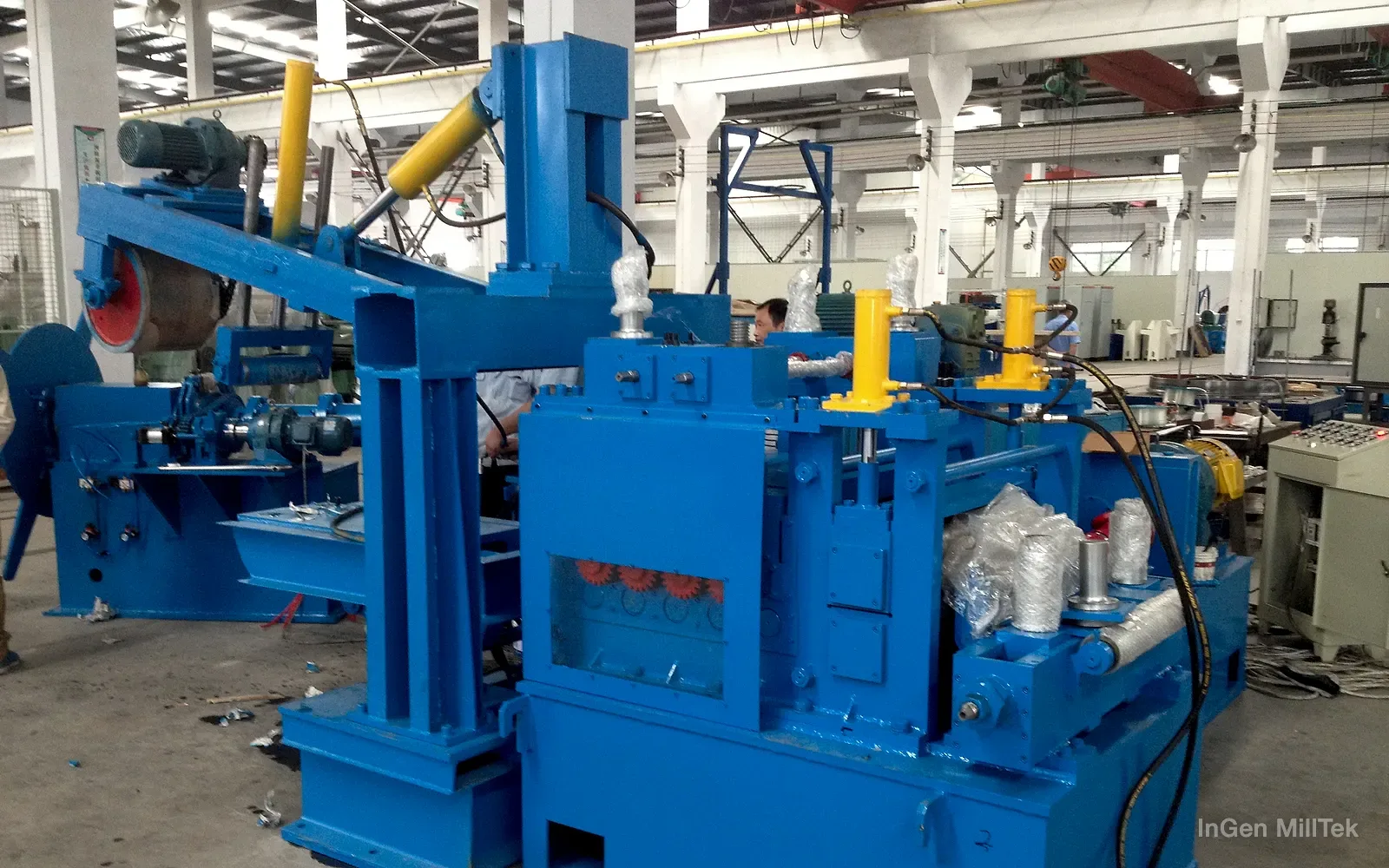
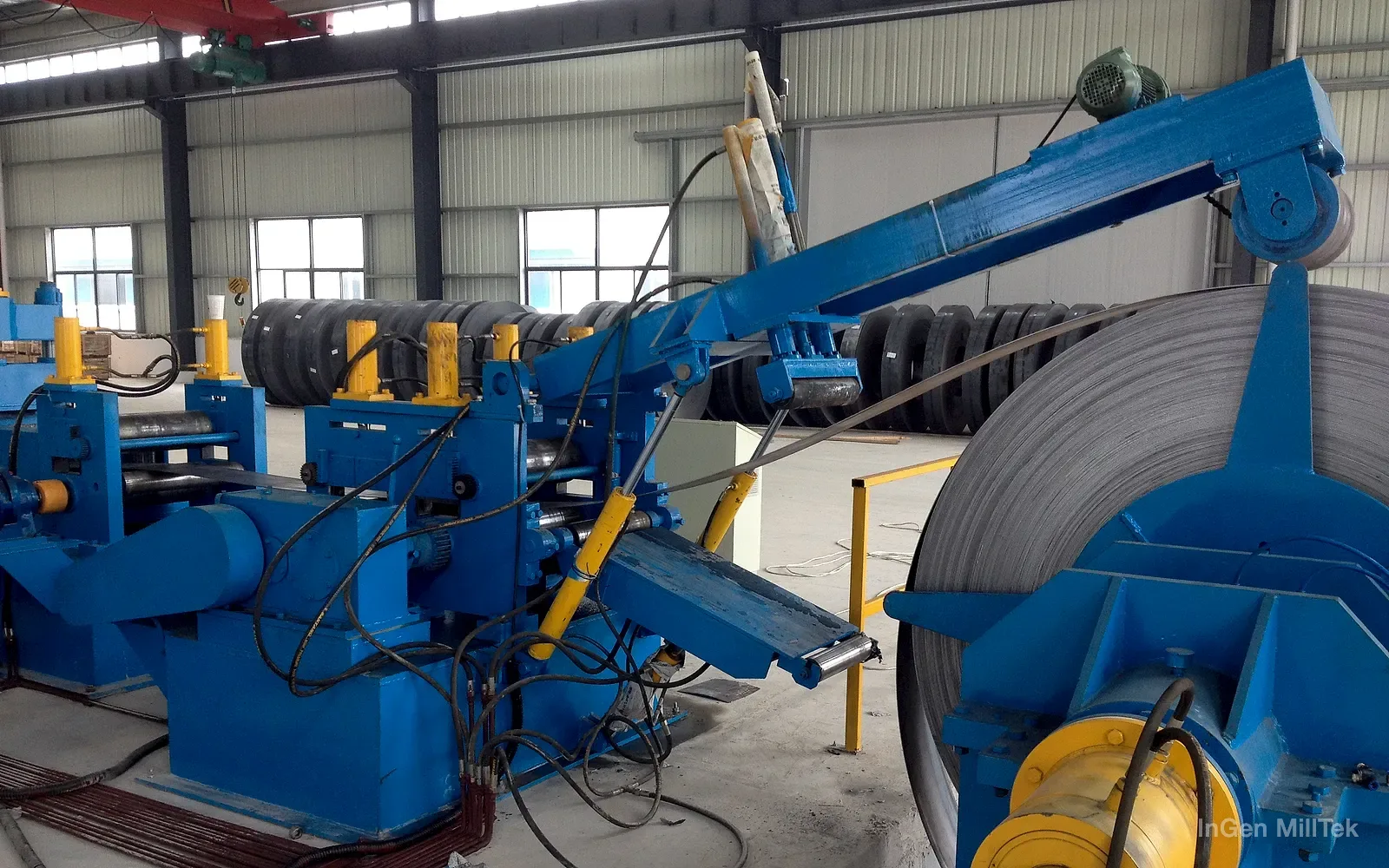
Actual specifications depend on the material and final equipment configuration.
| Type | Rolls | Strip thickness mm |
|---|---|---|
| 5-roll leveler | — | 4–6 |
| 6-roll leveler | Fine rolls | 4–7 |
| 6-roll leveler | Coarse rolls | 5–12 |
| 7-roll leveler | — | 4–9 |
| 8-roll leveler | — | 4–12 |
| 15-roll continuous leveler | — | 1–4 |
Source: company product catalogue (April 2025 edition), page 9.
Use these points to prepare the equipment discussion. Specifications and configuration depend on the project.
We discuss the suitable model and configuration for your product and plant. Every line is configured per project, and pricing follows the configuration.